Why Does My Cat Lick Me, Then Bite Me?
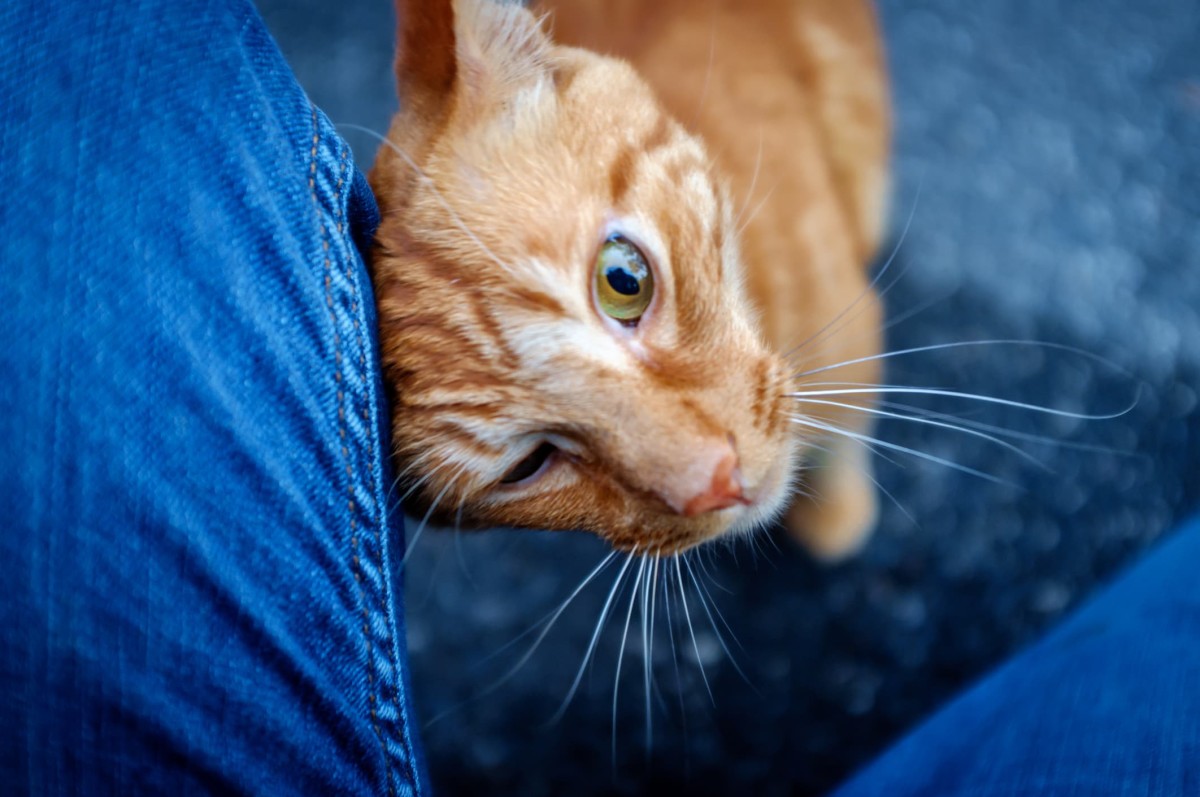
Cats that lick and then bite you are probably expressing their love by giving a “love bite.” This is particularly likely if you’re just lounging around and not petting your cat, and they’ve decided they want your attention. But, in certain situations, it might be an indication of something else. It’s a common behavior in many cats that have become overstimulated, and until you learn how to handle it with your cat, it can be frightening and frustrating.
The majority of cats’ aggressive behavior is directed at their owners, and it may be difficult to know how to react. The behavior may start with affectionate licking and then move quickly towards actions like stalking, chasing, attacking, running, hiding, pouncing, leaping, batting, swatting, grasping, fighting, and, of course, biting.

When Should I Be Worried About Cat Bites?
My cat bites me then licks me because it’s showing affection mixed with play, instinct, or mild overstimulation—not aggression. However, an otherwise affectionate cat might suddenly feel the need to defend itself when they are experiencing fear, pain, or stress. Or perhaps when acting with their predatory instincts. You should call your veterinarian if your cat suddenly bites you without provocation to make sure there isn’t anything physically wrong with them.
The following five situations outline some circumstances in which you may raise concerns about your cat’s licking-and-biting behavior.
- When your cat bites you hard
- Excessive licking and biting
- Licking and biting on the face
- Excessive licking and biting in the morning
- Biting while being petted

1. When Your Cat Bites You Hard
A cat might occasionally lick you playfully but then bite you firmly. Because they are acting on their innate desire to hunt, cats frequently bite strongly after licking affectionately. Licking, biting, and kicking are especially common play actions for growing kittens. They mimic how they pounce, grab, and attack their prey when they play like this.
The Fix?
Yelling at your cat for biting is never a smart idea. If they bite you hard while you’re playing, firmly exclaim “ow” and then leave. They will discover that biting forcefully puts an end to playtime. Punishing or yelling at them will only make them fearful and more likely to respond negatively.
2. Excessive Licking and Biting
In most cases, cat licking and biting are normal behaviors that cats engage in when interacting with their environment. They may do this to express affection, request our attention, or simply enjoy some alone time. Cats lick to express love, form bonds with people and other cats, and groom.
Licking and biting are their ways of telling us what they want or how they are feeling, so we must pay attention. However, when your cat keeps licking and biting you excessively, it may be a sign that they are stressed, anxious, or allergic.
The Fix?
Along with other symptoms like biting, restlessness, shaking, drooling, and loss of appetite, an anxious cat may require medical attention. Try calming them using a Feliway pheromone diffuser. This is a highly effective product you can use at home to mimic a mother cat’s soothing pheromones. But please know that a vet may need to prescribe supplements or medications to treat ongoing anxiety.
3. Licking and Biting on the Face
Cats frequently lick our faces while we rest, and if they need attention, they might even bite us while we sleep. Our cats’ behavior suggests that they view us as family members. They will take care of us by grooming us and fostering our relationship because they want us to be healthy.
However, when your cats lick your face, it may pose potential health risks. The saliva of a cat’s mouth contains several parasites and bacteria referred to as Pasteurella, which can lead to lymph nodes and occasionally serious infections. Of course, those germs will get on you when they lick and bite your face.
The Fix?
The most effective thing you can do is try to divert your cat’s attention to something else to prevent them from licking you and then biting your face. If your cat enjoys being petted, you might do so to deter them from licking. Similarly, you might try entertaining them in a different way to get them to focus on playing rather than focusing on you.

4. Excessive Licking and Biting in the Morning
Cats are generally more affectionate in the mornings because they anticipate their owners being active and engaged with them. Some look for extra attention in the early hours because they feel deprived after sleeping all night. In the morning, cats seek food, love, and interaction. (For instance, does your cat always follow you to the bathroom when you get up?)
Cats may seek us out more often in the mornings because of these positive associations. And so, you can anticipate that they will lick and bite you more frequently (and perhaps more aggressively) than at other times of the day.
The Fix?
If the behavior bothers you, try ignoring your cat for a while, and watch to see if they shift focus to something else.
5. Biting While Being Petted
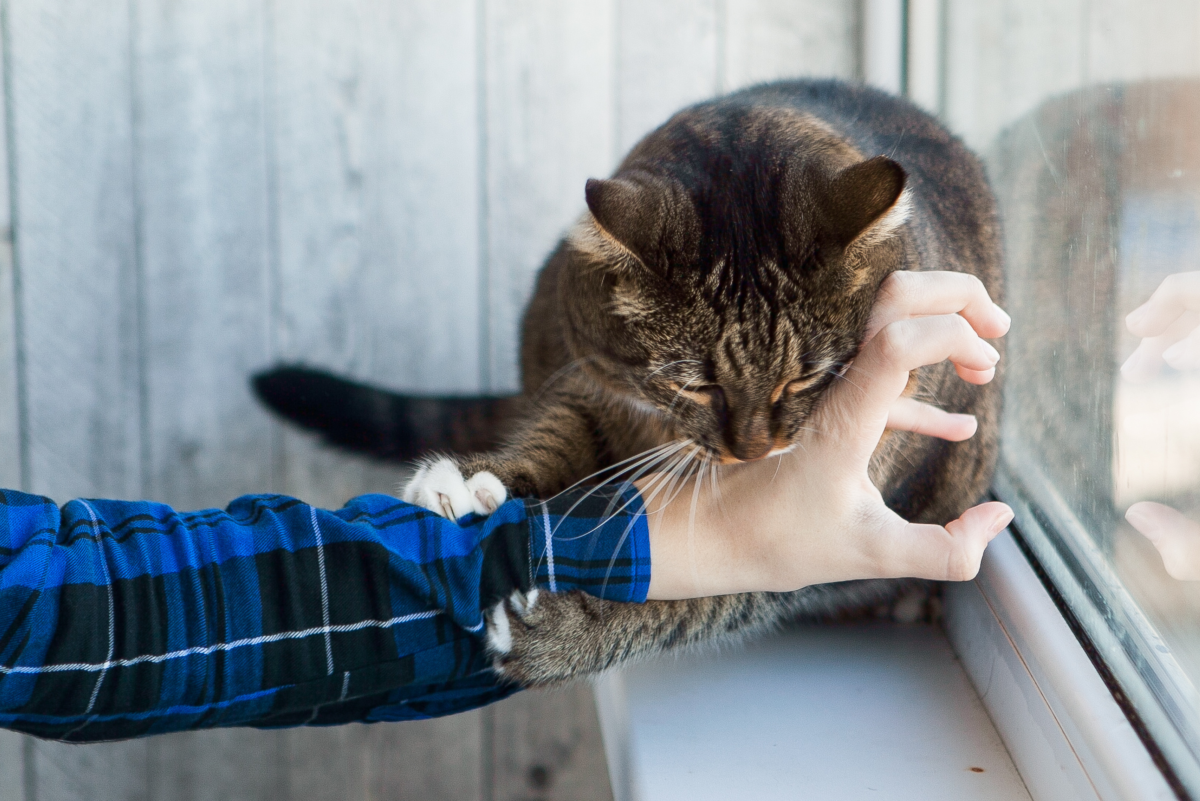
If your cat wants to play, it might lick you and then start nibbling as a prompt to play. During times of petting, cats also commonly nibble or bite their owners. It is especially common in cats that have recently given birth. These animals act similarly to a mother cat grooming her kittens with tiny bites.
However, a lot of licking and biting during petting sessions can suggest stress or anxiety. It might be a sign that they are trying to communicate with you to let you know how they are feeling.
The Fix?
If your cat is frequently licking and biting and you’re concerned, you may need to take them to the vet for diagnosis and treatment.
If in Doubt About Your Cat’s Biting, Contact a Vet
By giving you loving licks and bites, your cat is letting you know how much it cares. It might be trying to cuddle, or it might just want to play rough. Cats who lick and bite are probably expressing their love with a “love bite.” If you’re just unwinding and not actively petting your cat, this is particularly likely.
But so-called “love bites” might also be a warning sign that something is amiss with your cat. Excessive licking and forceful biting can sometimes be a sign of play aggression, anxiety, pain, or stress. If you are in any way concerned about the extent of your cat’s behavior, it’s a good idea to consult a veterinarian.
Sources and Further Reading
- Why Do Cats Bite & How To Stop Your Cat Biting You | Purina
Learn more about the reasons behind why cats start biting and find the best ways to stop your cat biting with our practical guide & tips. - Why Does My Cat Lick Me? 7 Common Reasons – PetMD