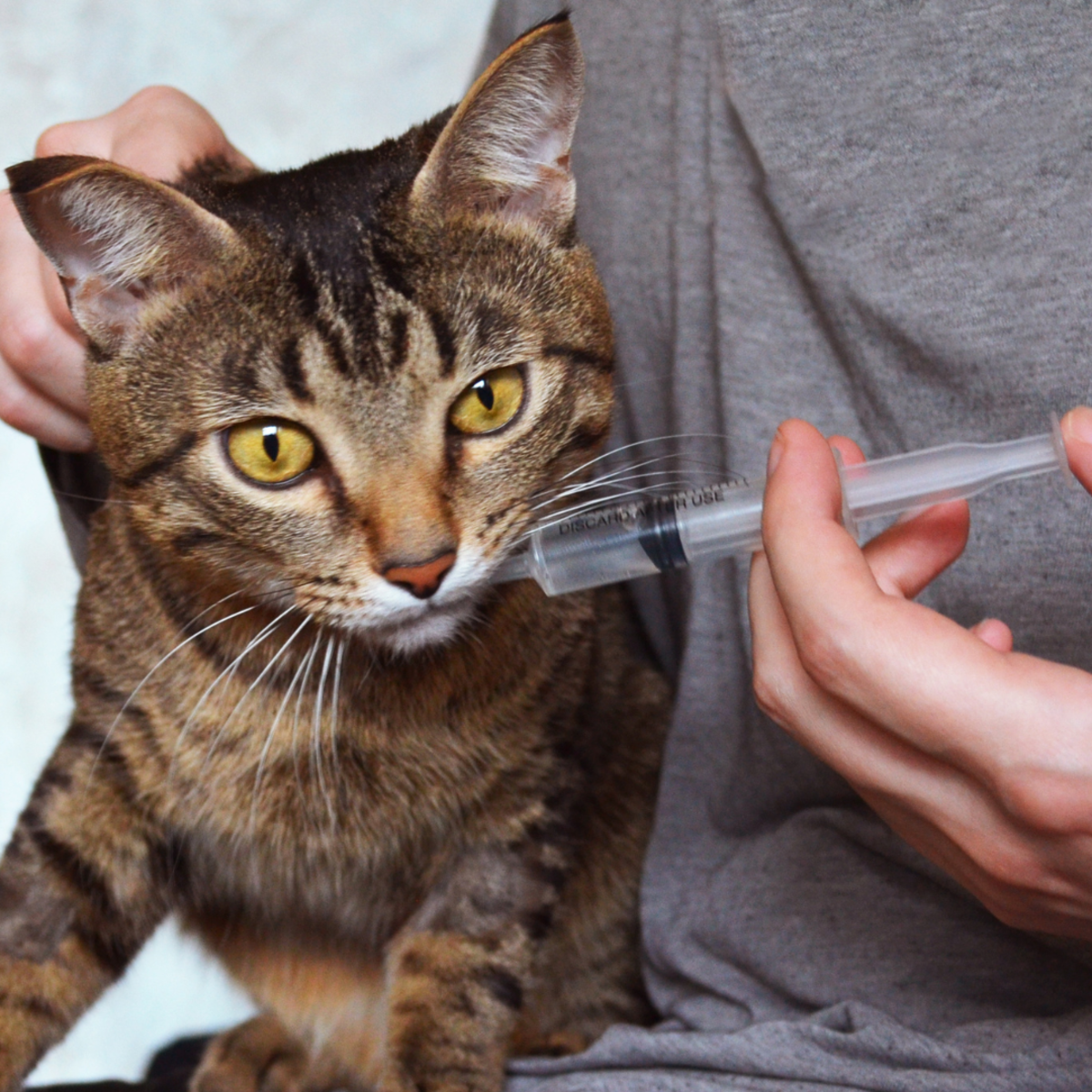
Cats can be picky eaters and even downright refuse to eat, which can be cause for concern. In some cases, syringe feeding a cat might be the most practical solution to make sure that your pet is getting the nutrition they need.
Syringe feeding a cat can be a daunting task for pet owners. So, we must understand when it is suitable and how to do it correctly. This article explains when syringe feeding a cat is an appropriate course of action. It also offers some step-by-step instructions on how to assist-feed your pet safely and with minimal stress.
What Is Syringe Feeding?
Syringe-feeding a cat means you are delivering food into the side of their mouth using a feeding syringe (or a regular syringe without the needle).
Assisted feeding may be necessary for several weeks or even months if the animal has a chronic condition that impairs its appetite. Sometimes, just getting some food moving through their system is enough to encourage a cat to resume eating on his or her own (1).
When Should You Consider Syringe Feeding a Cat?
Syringe feeding a cat is a necessary course of action when a cat is unable to eat or drink on its own as a result of illness or injury. It can also be a practical way to issue medications that the animal can’t take orally.
For example:
- Post-Surgery Recovery: Some cats temporarily lose their appetite or have difficulty consuming food after a procedure.
- Chronic Illnesses: Conditions like kidney disease, liver disease, or cancer can impair a cat’s eating abilities or appetite.
- Dental Problems: Cats with severe dental issues may be in pain and struggle to eat.
- Dehydration: Syringe feeding might be necessary to hydrate a cat if they are dehydrated and not drinking enough water.
- Nutritional Support: Assisted feeding can deliver much-needed nutrients if underweight or malnourished.
Important! Before attempting to syringe feed a cat, please speak with your local vet to be sure that it is the appropriate course of action before proceeding (2).
Choosing the Right Syringe
You’ll need the right equipment, including a properly sized syringe for the cat’s weight.
| Cat’s Weight (lbs) | Syringe Size (ml) |
|---|---|
| Up to 5 lbs | 5 ml |
| 5-10 lbs | 10 ml |
| 10-15 lbs | 20 ml |
| Over 15 lbs | 40 ml |
To make it easier to administer food, you ideally want to use a syringe with a blunt tip and a large bore. There’s no need to buy these because most pharmacies will give you free oral medicine syringes of all sizes if you ask for them (3).
Choosing the Right Food
You will also need to choose food that will work for syringe feeding a cat. The diet should be:
- Nutritionally balanced
- Easily digestible
- Designed specifically for cats
You can also moisten and puree their regular food by adding up to 20% water (4). It is helpful to pre-measure how much the cat should eat in the day so that you know the amount of pureed food to give them.

Steps for Syringe-Feeding a Cat
When syringe feeding a cat, it is important to make sure that the process is done safely and correctly. Following these simple guidelines will help you give them a safe course of syringe feeding.
- Firstly, make sure the cat is as comfortable and at ease as you can. It is helpful to feed them in a quiet and relaxing environment to reduce stress.
- Ensure that the syringe is clean and that the food or medicine is at room temperature.
- CRITICAL: Keep the cat in a natural, upright position. All four feet should be in contact with the ground, and their spine should be in a natural, neutral position (5). NEVER position a cat on their back during syringe feeding as this significantly increases aspiration risk (6).
- Hold the cat securely and carefully insert the syringe into the side of the mouth with the tip pointed toward their cheek (not toward the throat) (7).
- Use a slow and steady hand when feeding the cat. Administer very small amounts at a time—approximately 0.1 mL or less per squeeze (8). This will reduce the risk of choking or aspirating food into the lungs.
- Gently squeeze the syringe until the cat begins to swallow, then stop and allow them to fully swallow before continuing (9).
- If the cat resists or stops swallowing, stop immediately and wait for them to start again before continuing.
- Be sure to give the cat plenty of time between feedings and avoid overfeeding.
- Be sure to clean the syringe thoroughly between feedings.
- Finally, please seek veterinary care if you can’t feed the cat or if it is not getting better.
Important Safety Tips
When administering food in this manner, please be careful not to overfill the syringe. If not careful, feeding too much too fast may cause food to enter the cat’s lungs and lead to aspiration pneumonia (10). Instead, proceed with caution and allow them to swallow each mouthful of food before offering any more.
If any food or medicine gets into the cat’s nose, please stop right away and call a vet for guidance.

Tips for Successfully Syringe Feeding a Cat
- Before you begin, it helps to have all of your supplies ready at hand. Plenty of towels are useful to have close by, as this process can get messy.
- It is much simpler to pre-fill the syringes with food at room temperature instead of cold, refrigerated food.
- When a cat is unconscious or having difficulty swallowing, you shouldn’t ever force food, liquids, or medications into its mouth.
- The food used in this process can cause cats to become intolerant to it. To avoid accidentally ruining their favorite food, it’s best to avoid using it for syringe feeding.
- For calm cats, a baby bib can be used to keep them clean while receiving syringe feedings.
- Cats that struggle to eat may benefit from a full towel wrap to keep them clean. This will also help protect you from any possible scratches.
Always Consult Your Vet Before Syringe-Feeding
With care and caution, syringe feeding a cat can be a practical way to give your pet the nutrition and medication it needs when it can’t otherwise eat on its own. However, please remember that it should be done with caution. Always call your veterinarian first and follow their instructions carefully. The tips in this article can help guide you, but they are not a substitute for personalized and professional veterinary care.
Syringe-Feeding a Grumpy Cat
Sources and Further Reading
- Feline Disease Management – Cornell Feline Health Center
- How to Get a Sick Cat to Eat – PetMD
- Syringe (Assisted) Feeding – Veterinary Resource
- How to Syringe-Feed, Tube-Feed, or Bottle-Feed a Pet – Clinical Veterinary Advisor, 4th Edition
- Oxbow Critical Care Tips and Tricks – Oxbow Animal Health
- Aspiration Pneumonia in Kittens – National Kitten Coalition
- How to Syringe Feed a Kitten: 5 Vet-Approved Steps – Catster
- Syringe Feeding – Kitten Lady
- Force Feeding Cats: Safe Methods and Risks – Pets Care
- Aspiration Pneumonia in Dogs and Cats – Preventive Vet