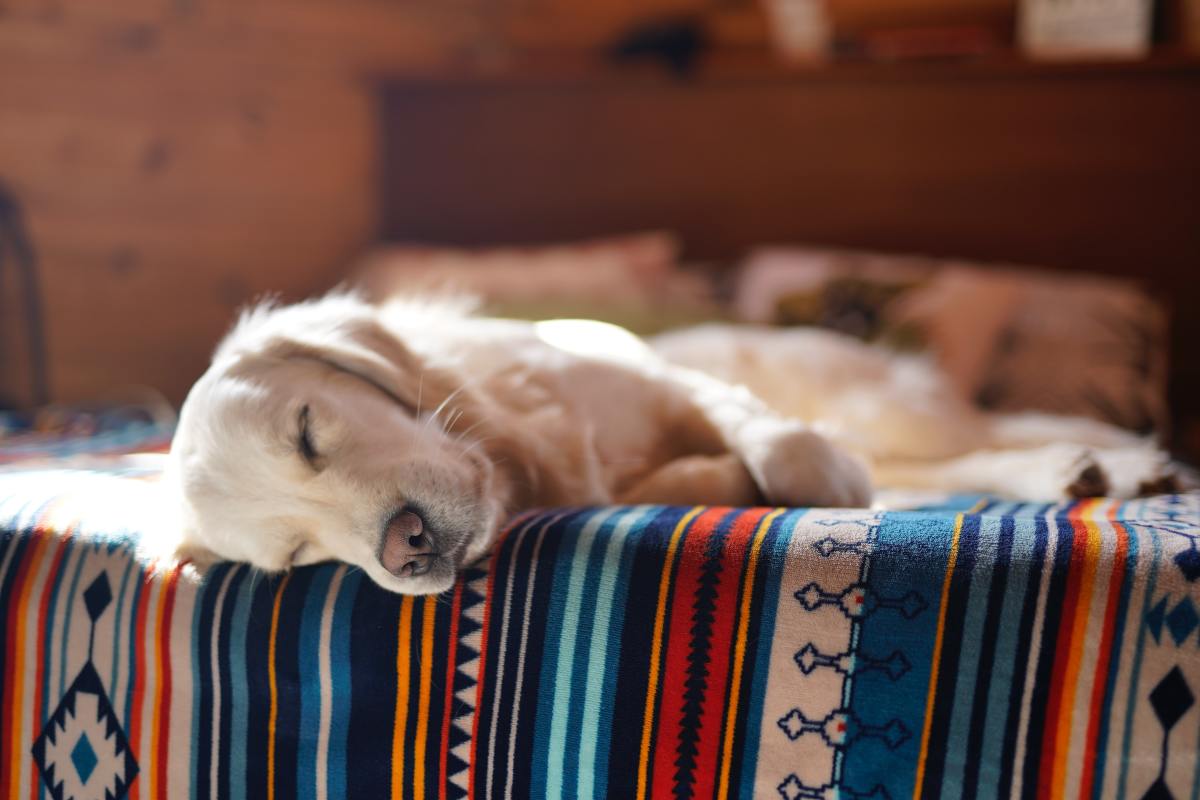
There’s something magical about watching your sleeping dog suddenly start wagging its tail. Is he dreaming of chasing squirrels, or is he simply happy that you’re nearby? The truth is, a dog wags its tail in its sleep as a reflex during dreaming, a sign of its brain processing daily experiences and emotions. Let’s closer look into the story of why, because it’s a fascinating look into the canine mind.
Understanding Dog Sleep Cycles
According to the American Kennel Club, dogs and other animals experience multiple sleep cycles, just like people do. They have times when they are awake, and then REM and non-REM sleep come after.
Using specialized tools, scientists can monitor these cycles and the related brain activity in dogs. During REM sleep, experts believe the body experiences vivid and memorable dreams, which cause specific body movements such as tail-wagging.
Did you know…
Dogs can dream about their owners! A Harvard psychologist, Dr. Deirdre Barrett, found that dogs tend to dream about familiar people and places – and sometimes even mimic their actions in their sleep. So if your dog wags its tail during sleep, it might mean they are dreaming of you!

REM Sleep in Dogs and Humans
The fascinating thing about REM sleep is that it causes slightly different bodily reactions in people than in other animals. We can learn more about why dogs wag their tails while they sleep if we examine the differences between REM sleep in humans and dogs in more detail.
REM Sleep in Humans
About 90 minutes after you lie down to sleep, your body enters REM sleep. As the night wears on, REM sleep lengthens. These are the characteristics of REM sleep in humans:
- Your body and mind are stimulated.
- Your breathing accelerates and becomes erratic.
- You dream because your brain is working.
- Your eyes flit from side to side.
- You cannot act out your dreams because of how relaxed and immobile your body becomes.
- Your body’s temperature regulation is less precise.
REM Sleep in Dogs
Scientists have gathered information about canine sleep patterns through clinical observations. They found that dogs’ breathing becomes more profound and regular as they fall asleep.
After about 20 minutes of REM sleep, the average dog usually starts to dream. During this stage of heightened mental activity, the following may occur:
- The dog might make whimpering sounds, wag his tail, or twitch his legs as he experiences heightened mental activity.
- His breathing may become rapid and irregular during dreams, and his muscles might also spasm.
- The eyes scurry behind their eyelids as if they are watching something.
You may have noticed twitching, tail wagging, leg kicks, and soft barks or grunts during your dog’s REM cycles. These actions indicate they are sleeping soundly and deeply and have a high brain activity level.

Is Your Dog Happy When He Wags His Tail in His Sleep?
Have you noticed your dog wagging his tail in his sleep and wondered if he is having an enjoyable dream? After all, dogs usually wag their tails when awake and happy, right? Well, not necessarily.
Why Do Dogs Wag Their Tails in Their Dreams?
When dogs dream, they may wag their tails for different reasons, and some may not be so pleasant. Just like humans, dogs have similar brain activity and sleep stages, allowing them to have various dreams.
Some dreams may be based on memories or experiences, while others may be random or abstract. Sometimes, your dog may dream about playing or hunting and wag his tail excitedly. But he might also be scared or anxious and wag his tail in nervousness.
What Other Signs Indicate a Dog’s Dream?
Wagging the tail is not the only sign of a dog’s dream. Your dog may also whine or move around in his sleep, which could mean either a good or a bad dream. It is challenging to tell what an animal is feeling or experiencing by looking at them.
However, you don’t have to worry too much about your dog’s sleeping behavior. VCA Animal Hospital says most dog dreams are not nightmares, so your pet is probably fine. Wagging the tail or whimpering in sleep is a normal part of a dog’s sleep cycle.

Why REM Sleep Is Important for Your Dog
REM sleep is necessary for a dog’s brain health, as it helps them learn and remember. When they twitch or wag their tails, it’s wise to leave them alone and let their brains sort out their emotions (whether the dreams are good or bad).
It may be tempting to wake your dog up if he seems distressed. But it’s also important to let dogs dream because dreaming helps them healthily process their experiences and emotions. Providing your dog with a comfortable and secure place to sleep is an ideal way to help them enjoy the benefits of REM sleep.
How to Help Your Dog Sleep Better
To enhance your dog’s sleep quality, consider these helpful suggestions:
- Try walking them briefly before bed to tire and calm them down.
- Teach them to wait for your invitation before heading to bed; this will help them learn when to sleep and play.
- Play white noise or soft music to soothe them and block disruptive sounds.
- Give them supplements or chew toys to relax and sleep.
These tips can help make sure they get the most restful sleep possible and wake up with a happy wagging tail!
Final Thoughts
When your dog wags its tail while sleeping, they are dreaming. Dreaming is more common in REM sleep when the tail and muscles twitch. Some dreams are good, and others are bad, but you shouldn’t wake them up from a nightmare. Some dogs might get scared or angry and bite.
The kindest thing to do is to let them sleep and dream naturally. Their dreams are usually not scary, so you don’t have to worry too much. Just watch their sleeping habits and make sure they are comfortable and happy.
Sources and Further Reading
- REM in Dogs – Is Tail Wagging Normal? | Pet Educate
Dogs wag their tails while they sleep subconsciously and involuntarily. It is believed that tail wagging is in response to emotions, likely driven by the deepest stages of sleep (REM – Rapid Eye Movement) sleep cycles. - REM in Humans – What Happens During Sleep? | NICHD
When a person is sleeping, the brain cycles through two basic phases, rapid eye movement (REM) sleep and non-REM sleep. - Study of Twitching in REM Sleep Versus Non-REM Sleep | PMC
As elevated twitching is often observed during REM sleep in some distal muscles, this study aimed to assess the potential for a finger-mounted device to measure finger twitches and thereby differentiate periods of REM and non-REM sleep. - Harvard Psychologist on the Meaning of Pet Dreams | People
Since dogs are generally extremely attached to their human owners, it’s likely your dog is dreaming of your face, your smell, and of pleasing or annoying you.
Does your dog wag its tail while it sleeps? Let us know in the comments below!