Many dogs stretch throughout the day. Most of the time, it’s normal and healthy. Still, many owners wonder why their dog stretches so much, especially if the behavior seems new or more frequent. Stretching can simply mean relaxation, but sometimes it can point to discomfort. This guide helps you understand what is normal and what may need a vet check.
Why Dogs Stretch Often
Dogs stretch for simple reasons like loosening stiff muscles, relaxing after sleep, or preparing for play. These stretches help warm their joints and support normal blood flow. If your dog looks relaxed, calm, or playful, the stretching is usually healthy.
Trouble starts when the stretching seems excessive or paired with signs of pain. Dogs sometimes stretch more when they have stomach problems, joint issues, or internal discomfort.

Common Types of Normal Stretching
Morning Stretch
Most dogs stretch after sleeping. They wake up, yawn, and loosen their muscles before moving around. This is one of the best signs of comfort.
Play Bow
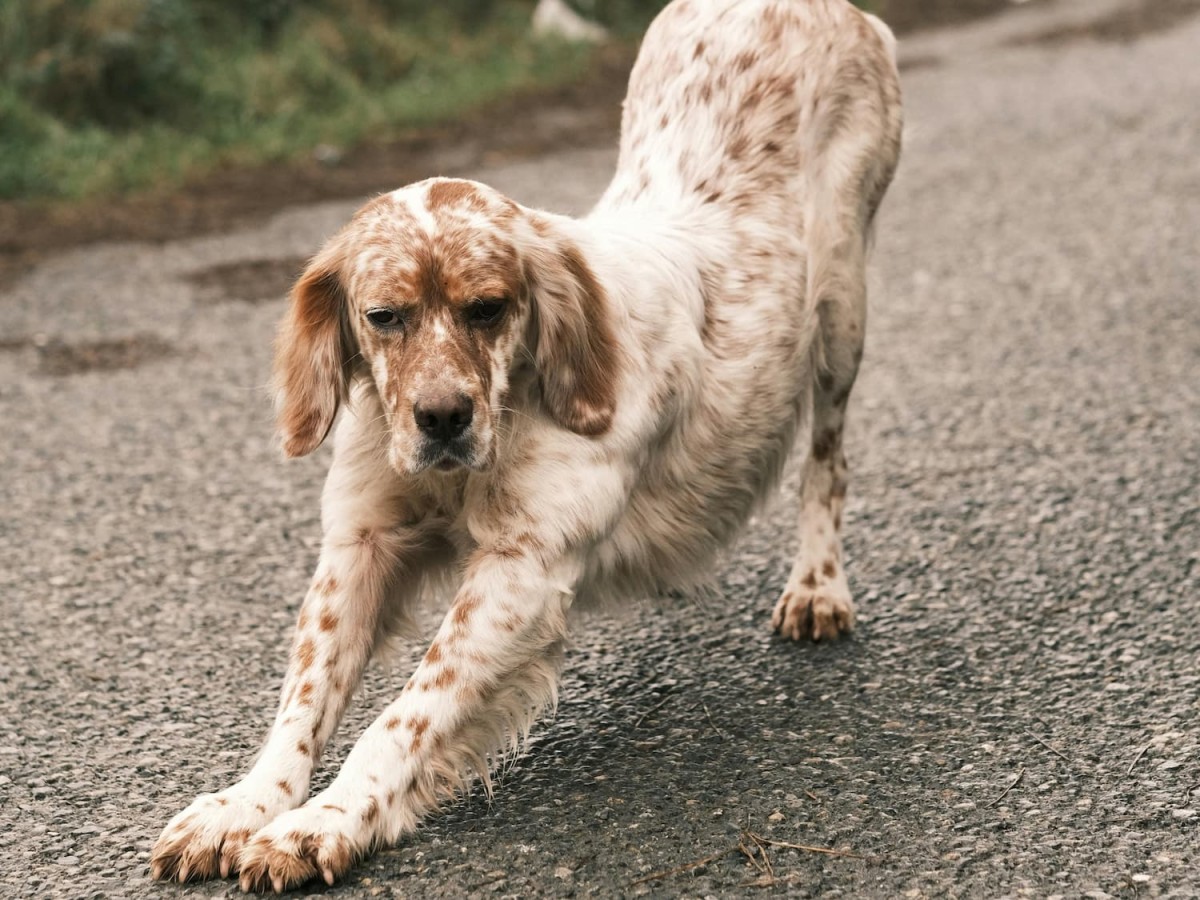
The “play bow” stretch is one of my favorites. As Adrienne Farricelli, a dog trainer and behavior consultant, explains, when a dog wants to play, it often engages in this specific stretch, which naturally comes from a playful invitation.
You’ll see their front legs stretched forward, their chest lowered, and at the same time, they keep their rear end up in the air. This pose is akin to a bowing motion.
The play bow is a wonderfully healthy part of any dog’s routine, and if they’re ready to play, it tells you that they are comfortable, content, and happy.

Splooting
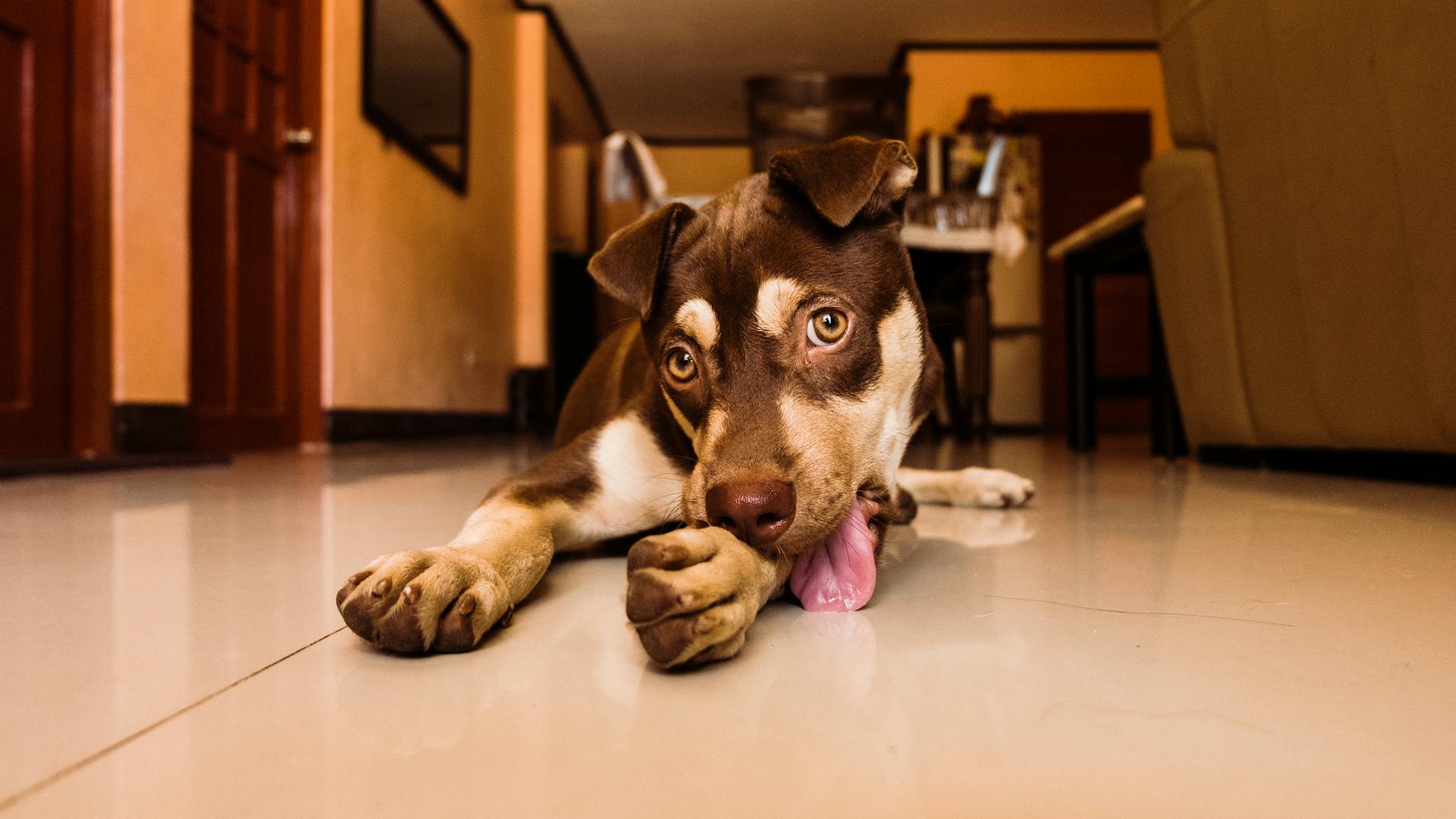
Splooting happens when a dog lies flat with their legs stretched behind them. Many puppies and flexible breeds do this when cooling down or relaxing. It also helps stretch their hips and legs.

Why Some Dogs Stretch More Than Others
Activity Level
Active dogs stretch more because their muscles warm and cool more often. Regular stretching keeps them flexible and reduces injury risk.
Senior dogs or dogs with limited mobility may stretch less because their joints feel stiff.
Breed Patterns
Some breeds naturally stretch more. High-energy breeds, like Border Collies, prepare their muscles for intense activity.
Short-legged breeds, like Dachshunds, may stretch differently due to body shape.
Any change in stretching style can signal discomfort, so keep an eye on what is typical for your dog.
Health Issues That Increase Stretching
Some medical conditions cause dogs to stretch in unusual or frequent ways.
Gastrointestinal Problems
Dogs often stretch to relieve stomach discomfort. Conditions range from mild tummy upset to serious illnesses like pancreatitis.
The most serious concern is bloat. Dogs may stretch their neck upward repeatedly when gas builds in the stomach. Bloat can be fatal without urgent care, so any sign of distress needs a same-day exam.
Joint or Muscle Pain
Arthritis, stiffness, or muscle tension can cause repetitive stretches. Look for limping, hesitation, or vocalizing. Senior dogs often show these signs first.
Signs That Stretching Might Signal a Problem
Watch for these warning signs:
- stiffness or hesitation when moving
- whining or yelping during a stretch
- limping or avoiding certain positions
- reduced appetite
- repeated neck stretching with the head lifted
- changes in normal activities
A dog that looks uncomfortable is telling you something. A quick call to your vet gives you clarity and helps your dog feel better.
Stretching as a Form of Communication
Stretching can also be social. The play bow invites fun. A relaxed stretch near you can be a request for affection. Some dogs stretch on or beside their owners because they feel safe and connected.
What Your Dog’s Stretching Might Mean
A relaxed dog with a soft posture and a wagging tail feels safe. A stiff dog with lowered energy may feel unwell. These signals help you understand their emotions and comfort level.
When to Contact Your Vet
Reach out to your veterinarian if your dog stretches more than usual and shows discomfort. Consider these questions:
- Has their behavior changed?
- Do they limp or hesitate?
- Are their joints stiff?
- Are they eating less?
- Does their stomach seem upset?
- Are they vocalizing?
An Example of a Concerning Stretch
Veterinarians note that the “prayer posture” can signal abdominal pain. This posture looks like a play bow but may last longer and appear tense. When paired with lethargy or appetite loss, it needs immediate care. For example, this Newsweek article about a viral TikTok video highlighted a dog owner’s warning about the first signs of cancer in her pet, namely a stretching behavior that turned out to be a symptom of lymphoma. While the stretch alone isn’t always a cause for concern, vets say that it might indicate abdominal pain when paired with other symptoms.
The experts quoted in the article advise that a veterinary evaluation is necessary if a dog frequently assumes the “prayer posture” (rear elevated with front legs and head lowered to the ground) and also seems lethargic or goes off their food.
Helpful Things You Can Do at Home
Provide Supportive Bedding
Orthopedic dog beds help reduce pressure on joints and support healthy sleep. Many dogs sleep better when they can stretch comfortably.
Use Gentle Stretching Exercises
Your veterinarian can show you simple exercises that help older dogs or dogs with mobility issues. These movements keep muscles flexible and support recovery after rest.
Maintain a Healthy Diet
A balanced diet keeps your dog at a safe weight. Extra weight strains joints and muscles. Supplements like fish oil or glucosamine may support mobility. Learn more about joint support at the American College of Veterinary Surgeons.
FAQ
Why does my dog stretch so much when he wakes up?
Most dogs stretch after resting because their muscles feel stiff and need warming. It’s a normal sign of comfort.
Why does my dog stretch in front of me?
Your dog may want attention or feel relaxed around you. Stretching near you can also be an invitation to play.
Is splooting normal for dogs?
Yes. Many dogs sploot when cooling down or relaxing. It’s usually healthy unless it looks painful.
When should I worry about stretching?
Worry if stretching comes with stomach upset, stiffness, vocalizing, low energy, or sudden changes in behavior.
Final Thoughts
Most stretching is healthy and shows that your dog feels relaxed or ready to play. Still, if you keep asking yourself why your dog stretches so much, watch for signs of discomfort. A quick veterinary assessment brings peace of mind and keeps your dog safe.
Sources
- Pancreatitis in Dogs – VCA Hospitals
- Bloat in Dogs – PetMD
- Gastric Dilatation Volvulus – VCA Hospitals
- Stretching and Range of Motion – Veterinary Surgical Centers
- Dog Behavior and Play Posture – Cornell University