Are you struggling with leash pulling on your daily walks? In this article, Aleksandar shares his story. He explains that dogs pull from fear or excitement, and that calm mental states (not force) build true leash cooperation. Read on to discover all his tips and tricks!
My mother and I live about a mile apart. The walking distance is usually ten minutes. Every morning, Milo loves visiting her. But here is the trick. He gets there in two to four minutes. He runs to my mom’s house. And on the way back? It takes him 15 to 20 minutes. On the way to her house, he pulls with his nose forward, legs pumping, and bursting with excitement. On the way back, he enjoys leisurely sniffing, wandering, and stopping to investigate almost every interesting smell.
Same dog. Same leash. Same street. Completely different walk.
The difference isn’t training. Milo is nine years old and knows how to walk nicely. The difference is his mental state. On the way there, he’s thinking at maximum capacity about those treats my mom gives him. On the way back, he’s calm.
The one real reason dogs pull
Dogs engage in leash pulling for one reason: high-level thinking. That statement sounds too simple, but it’s accurate.
High-level thinking breaks into two categories: fear and excitement. Both flood your dog’s brain with intensity. Both make cooperation nearly impossible, and they look identical from your end of the leash.
Fear makes dogs want out. A dog worried about traffic, other dogs, loud noises, or unfamiliar places will pull because their brain is screaming, “Get away from this.” That’s the survival mechanism kicking in.
Excitement makes dogs want in. A dog fixated on playing, greeting another dog, reaching for food, or chasing a squirrel will pull because their brain is locked onto that goal. Milo sprinting toward my mother’s house isn’t misbehaving. He’s thinking so hard about treats that he can’t process anything else, including my voice asking him to slow down. When he was younger, he was pulling with the same excitement on the way to the doggy park to play with his friends.
When Milo hears fireworks or loud booms during a walk, he pulls like his life depends on reaching home. That’s fear. When he sees my mother’s door, he pulls as if nothing else exists. That’s excitement: different triggers, same result, same cause.
Leash pulling happens when high-level thinking (either fear or excitement) overwhelms a dog’s ability to focus and cooperate.

Why you can’t train a dog that won’t listen
Every pet parent tries their best to get their dog to heel or walk nicely. But when you do it during a pull session, it doesn’t work. Why? Because your dog’s brain is maxed out. He is not trying to be disobedient or anything.
Think about it from his point of view. What would you do if you were terrified or desperately wanted something? Would you stop until you get it or until you get away from the scary situation? That is the same mental state your dog is going through.
Training requires a calm state. Dogs in high-level thinking states can’t learn, retain information, or respond to commands they know perfectly well in other contexts. In this case, you are not dealing with a stubborn dog or a disobedient dog. You’re dealing with brain chemistry.
This is why traditional obedience training often fails on walks. You can drill loose leash walking in your quiet backyard all day. The second your dog hits the street and encounters triggers that spike their thinking, that training vanishes. The skill is still there. The mental capacity to access it isn’t.
What high-level thinking looks like
Watch dogs walking calmly on a leash. They trot gently. They check in with their owners. They notice things without fixating. They’re in a low-level thinking state. Their brain has the capacity to cooperate.
Now watch a dog locked onto a target. The body goes rigid. The breathing changes. The ears pin forward or flatten back. Everything else disappears. That’s high-level thinking, and no amount of leash corrections or commands will penetrate it.
Milo’s body language tells me everything. When he’s calm on the walk home from my mother’s house, his gait is loose. He stops to sniff. He looks at me occasionally. When he’s excited on the way there, his muscles tense. His focus narrows to a single point ahead. He doesn’t glance at me once.
The same shift happens with fear. A dog pulling away from a scary noise isn’t choosing to ignore you. They’re in survival mode. The thinking part of their brain has handed control to the reactive part.
Why don’t dogs cooperate on walks in the first place?
Dogs and humans go for a walk for different reasons. We go on walks to get some exercise and fresh air. But dogs go on walks to gather information. Your dog is scent-driven, no matter the breed. For dogs, a five-minute sniff walk is more satisfying than a thirty-minute forced march.
When we rush them past interesting smells, we’re essentially dragging them away from their version of scrolling the internet. They pull because we’re not letting them do what walks are for in their mind.
Overstimulation compounds this. Too many sights, sounds, smells, dogs, people, and cars happening at once push dogs into high-level thinking. They can’t process it all, so they either shut down or pull toward or away from stimuli.
Energy mismatch creates problems, too. An under-exercised dog has no outlet, so walks become frantic. They pull because they’re bursting with pent-up energy. An over-exercised dog shuts down or becomes anxious because they’re depleted.
Communication gaps make it worse. If you’re inconsistent about when pulling is acceptable, your dog never learns the actual expectation. Sometimes you let them surge ahead to greet another dog. Sometimes you correct them for it. They can’t figure out the rule.
The mistakes that make leash pulling worse
Retractable leashes teach leash pulling. Your dog pulls, the leash extends, and they reach their goal. That’s a reward cycle.
The wrong collar and harness can cause pain while pulling, which only increases fear and results in more pulling. It is a vicious cycle, and your walking gear adds to it.
Starting walks when your dog is already amped up guarantees a difficult walk. If they’re bouncing off the walls when you clip the leash, they’re already in high-level thinking.
Treating all walks the same doesn’t work. Your dog needs different types of walks: structured walks where you lead, decompression walks where they sniff freely, and training walks where you practice skills. Expecting cooperation on every walk, regardless of purpose, sets everyone up for frustration.
Expecting results without teaching what cooperation looks like is common. Dogs don’t instinctively know that walking next to you at your pace is the goal. That’s a human construct.
Reducing the thinking (the actual solution)
If high-level thinking causes pulling, and calm dogs don’t pull, the solution is lowering your dog’s mental state before and during walks.
This isn’t about dominance or corrections. It’s about managing their brain chemistry so they can cooperate.
Start before you leave
Start before you leave the house. If your dog goes ballistic when you pick up the leash, you’ve already lost. Practice picking up the leash and putting it down without going anywhere. Do it fifty times if needed. The goal is boring predictability. When grabbing the leash stops being exciting, your dog’s thinking level drops.
At the door, wait for four paws on the floor and a calm body before you step outside. This can take five minutes at first. That’s fine. You’re teaching your dog that walks happen in a calm state, period.
When excitement spikes
Outside, if your dog’s thinking spikes, stop moving. Don’t yank the leash. Don’t say anything. Just stop. Wait for them to glance at you or release tension in the leash. Then move forward. You’re teaching them that pulling stops progress.
For excitement-based pulling, redirect before the trigger. If Milo starts locking onto my mother’s house from half a block away, I turn and walk the opposite direction before he reaches maximum excitement. We circle back when he’s calmer. Some days, we do this three times before we make it to her door.
When fear spikes
For fear-based pulling, increase the distance from the trigger. If fireworks terrify Milo, I don’t force him to sit and endure them. I calmly walk him away until he’s far enough that his thinking level drops. Pushing through fear makes it worse.
Different walks for different mental states
Structured walks work when your dog is already calm. These are the walks where you expect cooperation, loose leash walking, and focus on you. If your dog can’t settle into a calm state, skip the structured walk.
Decompression walks are for lowering high-level thinking. Let your dog sniff as much as they want. Wander. Take twice as long as usual. Sniffing is mentally exhausting in a good way. It processes information and lowers arousal. Milo’s long walk home from my mother’s house is decompression. He’s working through all that excitement by investigating smells.
Exposure walks gradually build confidence around fear triggers. You’re not forcing your dog to face their fear. You’re letting them observe it from a safe distance while staying calm. Over time, you decrease the distance. This only works if you keep their thinking level low throughout.
Training walks are short, focused sessions where you practice specific skills in low-distraction environments. These aren’t about getting somewhere. They’re about building the cooperation muscle.
If you try to force structure during excitement or fear, you’ll fail. Match the walk type to your dog’s mental state.
What cooperation actually looks like
Cooperation isn’t a perfect heel. It’s a dog who can think clearly enough to check in with you.
A loose leash means there’s slack, not that your dog is glued to your side. Milo’s calm walk home includes sniffing, wandering within the leash length, and stopping to investigate. He’s not pulling because he’s not fixated. That’s cooperation.
Check-ins matter more than position. When your dog voluntarily looks at you during a walk, they’re saying their thinking level is low enough to remember you exist. Reward that with a treat, verbal praise, or letting them sniff something interesting.
The gentle trot is the gold standard. Watch your dog’s gait. Tense, rigid, lunging? High-level thinking. Loose, easy, relaxed? Calm state. You can feel this through the leash.
Breed and personality matter
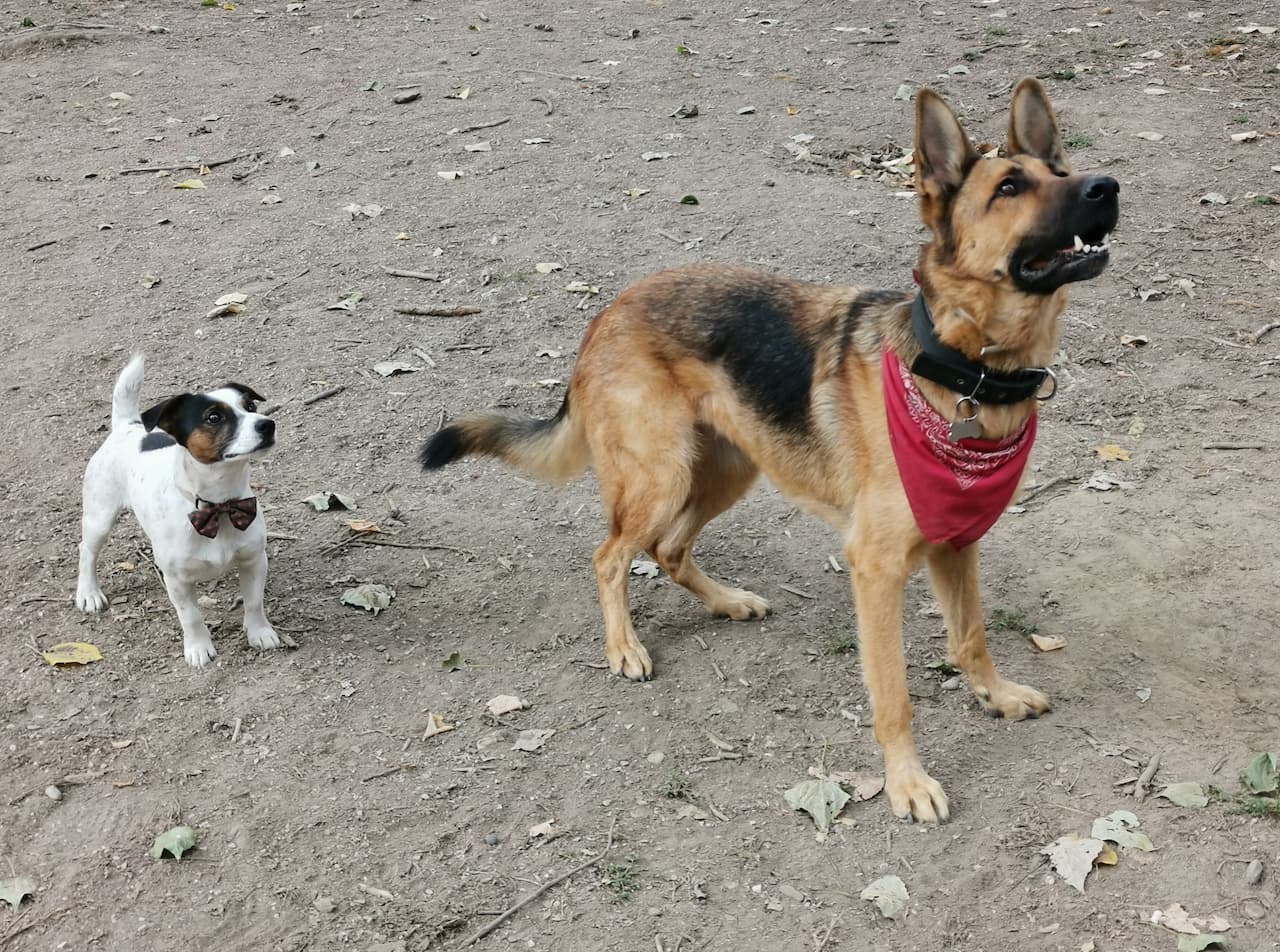
Jack Russells like Milo were bred for high-arousal work. They’re terriers. They’re supposed to be intense, focused, and quick to excitement. That’s the breed.
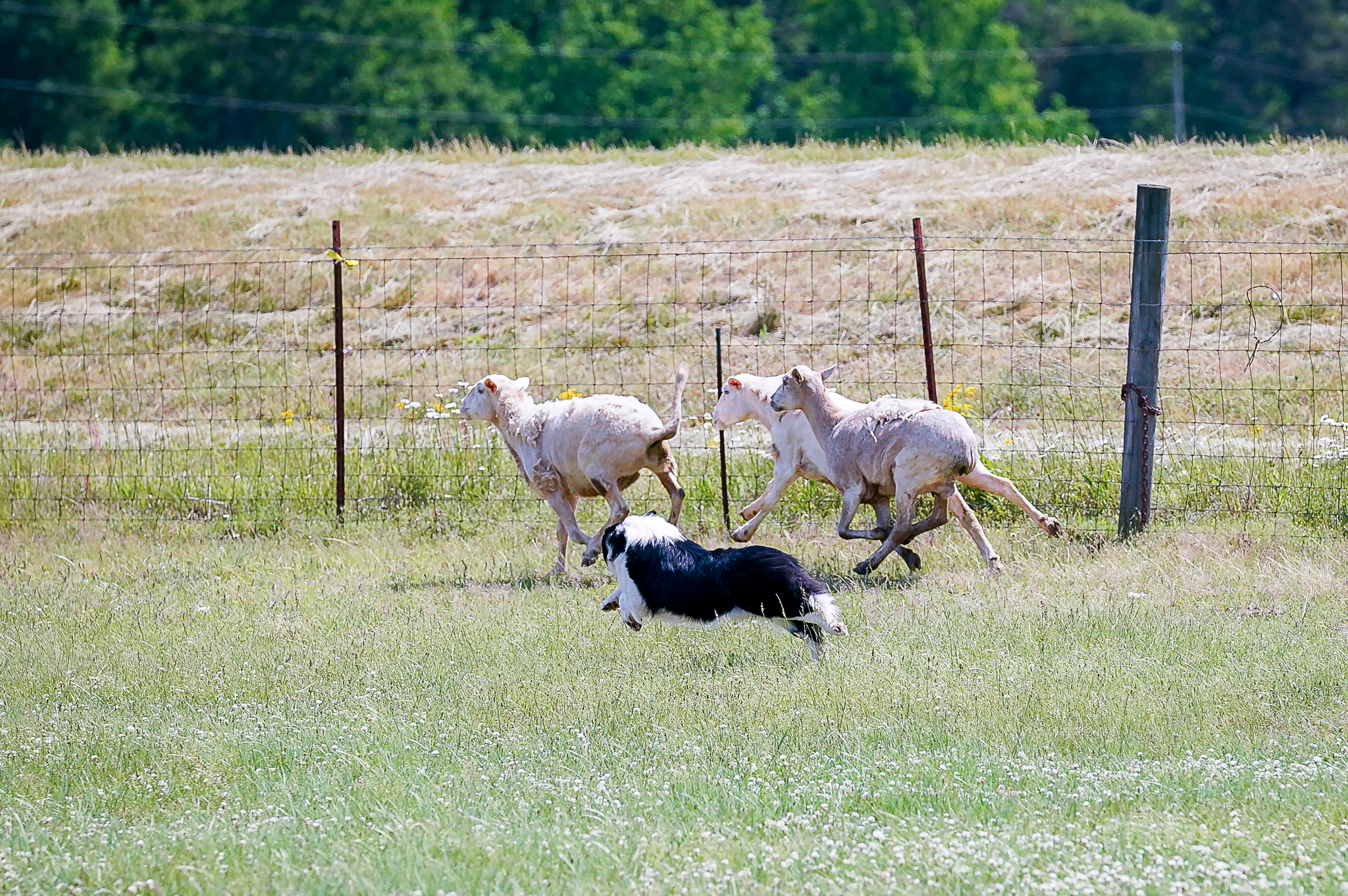
Herding dogs, sporting dogs, and working breeds have similar wiring. They’re built for jobs that require focus and drive. Walks trigger those instincts.
You can’t train away genetics, but you can manage them. High-arousal breeds need more decompression walks, more pre-walk calming rituals, and more redirection before they hit peak excitement.
Anxious dogs need distance from triggers and predictable routines. Confident dogs might handle more stimulation, but still need calm states reinforced.
Senior dogs often have lower baseline excitement. Milo at nine is easier than Milo at two, but he still sprints to my mother’s house.
Troubleshooting specific scenarios
If your dog lunges at other dogs, identify whether it’s excitement or fear. Excited lunging includes a wagging tail, loose body, and play bow attempts. Fear-based lunging includes a stiff body, pinned ears, and raised hackles. The solution for excitement is redirecting before the fixation starts. The solution for fear is increasing distance until your dog can stay calm.
If your dog freezes and won’t move, that’s the freeze response. Don’t drag them. Lower the scary thing’s intensity by moving away or blocking their view. Wait for them to unfreeze, then reward movement in any direction.
If your dog zigzags constantly to sniff, they’re overstimulated. Slow down. Let them process. Decompression walks help.
Multiple triggers on one walk require triage. You can’t manage everything at once. Pick the biggest trigger, handle that, and let the rest go.
The long game
Reducing your dog’s thinking level on walks affects everything else. A dog who learns to stay calm around triggers learns faster in other training scenarios. They’re in a peaceful state where their brain can actually absorb information.
The compound effect is real. Each calm walk builds the next one. Each time you successfully lower their thinking before it peaks, you’re strengthening that skill.
Milo still sprints to my mother’s house sometimes. On high-energy days or if it’s been a while since he saw her, his excitement overrides everything else. That’s fine. Progress isn’t perfection.
Bad days happen. Unexpected fireworks, a sudden dog appearing around a corner, and construction noise. On those days, I focus on getting us both home calmly. That’s the win.
Small improvements matter more than dramatic transformations. One crosswalk where your dog stays calm. One interaction with another dog where they don’t lunge. One walk where they check in with you twice instead of zero times.
What to do tomorrow to fix leash pulling
Figure out if your dog pulls from fear or excitement. Watch their body language. Tight, forward-focused, straining toward something? Excitement. Tight, trying to retreat, ears back? Fear.
Pick one technique to try. If excitement is the issue, practice the doorway drill. Don’t leave the house until your dog is calm. If fear is the issue, identify the trigger and increase distance from it.
Watch for the calm state. Learn what your dog looks like when their thinking level drops. That gentle trot, that loose leash, that glance back at you. That’s your target.
Cooperation is lowering the thinking so your dog can access the skills they already have. Calm dogs don’t pull because they can hear you, see you, and choose to stay connected.
The walk home from my mother’s house taught me that. Milo knows how to walk nicely. He just needs his brain to be available to do it.