In this post, Aleksandar shows how our dogs’ daily meals can become powerful training moments that build focus, calm energy, and better behavior! Below, he shares simple food games for dogs that can turn feeding time into meaningful, brain-engaging fun. Read on to learn more!

The power of food games for dogs
I was wasting two meals a day. Every single day. It took me embarrassingly long to figure that out.
Milo would hit the bowl, inhale everything in about twelve seconds, then spend the next hour bouncing off the walls while I wondered why he couldn’t just settle. The food was gone. But the energy wasn’t. And I kept thinking the answer was more walks, more exercise, more of something.
It wasn’t. The answer was already in my hand twice a day. I just didn’t know what to do with it.
Why food works better than most training tools
Food creates instant feedback. Your dog does something, something good happens. That loop is fast, clear, and more powerful than most people realize. It’s also the easiest way to build focus, because you control access to the reward.
There’s another layer most people overlook. When you make your dog work for food, you’re not being strict. You’re giving them a job. Dogs are wired to solve problems. Eating from a bowl takes seconds. Working for food can engage them for fifteen minutes or more.
That mental effort adds up. A short sniffing session can tire a dog out more than a full walk around the block.
Start with hand feeding
Even if you do not want to try anything else on this list, I suggest starting with hand feeding.
When Milo was eating from a bowl, he was in his own world. The moment I started feeding from my hand, something changed. He started watching me instead of the bowl. Then he slowed down. He thought before he moved.
Hand feeding teaches your dog that good things come through you. That sounds simple, but the behavioral ripple is huge. Attention improves. Impulse control strengthens. Even anxious dogs begin to relax because the interaction becomes predictable and safe.
Start with one meal. Feed piece by piece. Let your dog learn that patience is rewarded faster than chaos.

The recall game disguised as playtime
This one looks basic. It’s not.
Toss a piece of kibble a short distance away and let your dog run to get it. The moment they grab it, call them back. When they return, reward them with food from your hand, something better than what they just found. You can do it with some high-value raw food treats.
What your dog slowly learns is that yes, there’s food out there. But the best stuff always comes back to you.
That’s the foundation of recall, built without a single formal drill. Increase the distance over time, add mild distractions, and change locations. The rule stays the same. The jackpot lives with you.
Scatter feeding: Ten minutes that change the whole evening
I call it doggy Easter. Milo calls it the best part of his week.
Scatter small pieces of food around the house and let your dog search. No commands, no structure, just permission to explore. Start easy, let them watch where you place a few pieces. Then make it harder; for example, behind furniture, under rugs, along baseboards.
What happens next is the part that surprised me the first time. And it will surprise you for sure. The chaotic energy fades. Milo slows down, locks in, and works through the space. Ten minutes of this and he’s ready to curl up and do nothing.
Sniffing isn’t passive for a dog. It’s problem-solving. And problem-solving is exhausting in the best possible way.

The hot and cold game
Most dogs hear your words. Few actually understand your tone.
Hide a treat while your dog isn’t looking. As they search, guide them with your voice, calm when they move away, more animated when they get closer. You’re not giving commands. You’re building a shared language. You can use the words “cold” and “hot” as well.
After a few sessions, you’ll notice your dog will adjust direction based on how you sound rather than what you say. That kind of communication carries into everything, such as recall, off-leash work, and chaotic situations where you need your dog to read you fast.
The snuffle mat
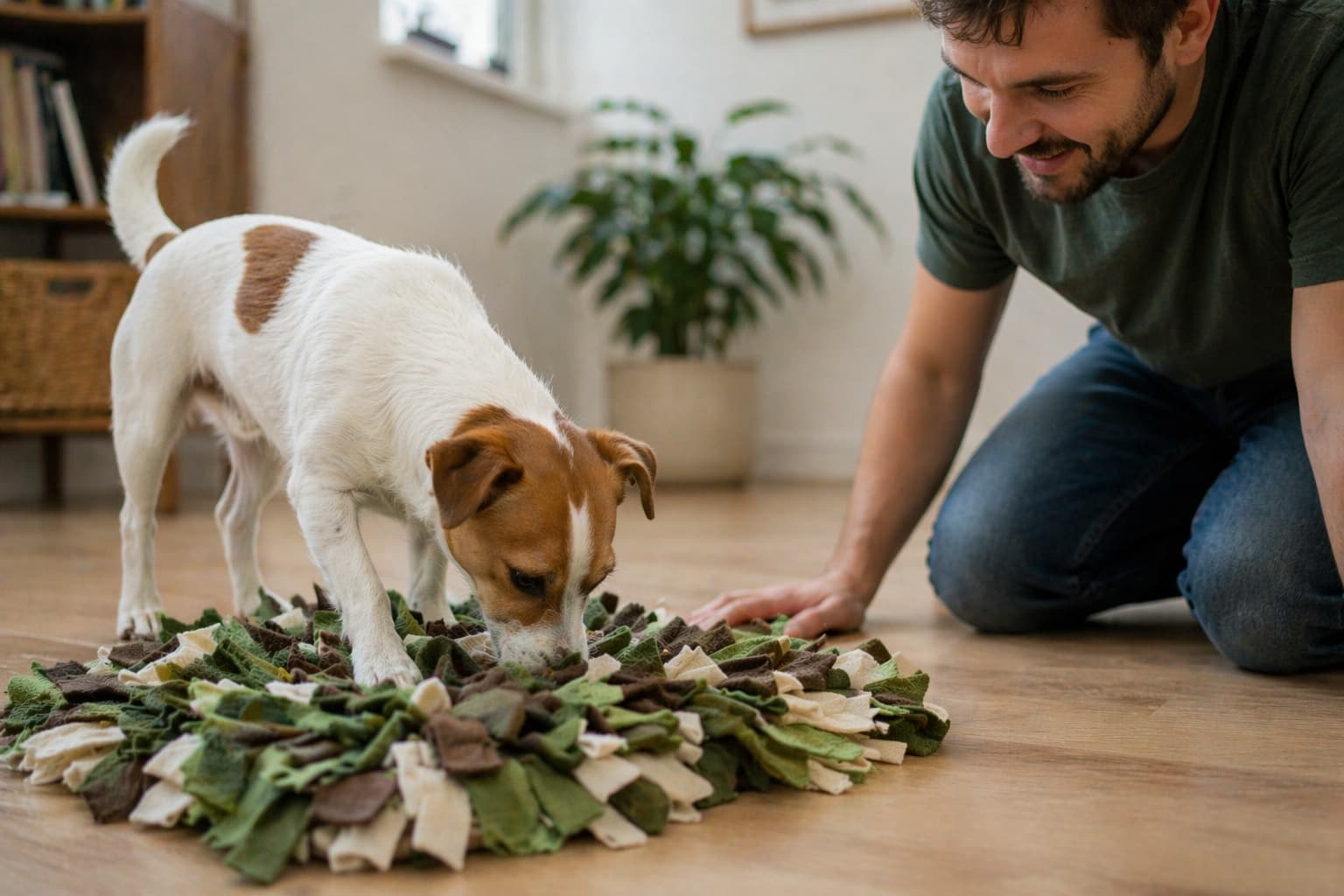
A snuffle mat is just fabric strips with food hidden inside. For a dog, it’s a puzzle that taps into something ancient.
That puzzle is what dogs are built to do. When you replace the bowl with a snuffle mat, you’re not just slowing them down; you’re giving them a task that feels meaningful to them on a level a walk doesn’t always reach.
I rotate this in a few times a week. On busy days, it gives Milo a real outlet without needing any setup or my full attention. Dinner becomes a fifteen-minute project instead of a twelve-second inhale.

The three-cup shuffle
Three cups, one treat, your dog watching.
Place a high-value treat under one cup, shuffle them slowly, then step back and let your dog figure it out. At first, they’ll guess. Then they’ll start using their nose. Then, and this is the interesting part, they’ll start watching your hands during the shuffle.
This game builds patience in a way most training exercises don’t. Your dog has to wait, observe, and think before acting. If your dog tends to bulldoze through everything on impulse, this is a good place to redirect that energy.

Impulse control: changing your dog’s daily life
This is the quietest game on the list and probably the most important.
Hold a piece of food in your closed hand and wait. Your dog will try everything: pawing, licking, nudging, staring. Ignore all of it. The moment they pause and make eye contact, mark it and open your hand.
That pause is the behavior you’re building.
From there, place food on the ground and ask for a wait. Walk around your dog while they hold position. Delay the reward a little longer each time. What you’re teaching isn’t restraint for the sake of it; you’re teaching your dog that pausing and checking in with you is always worth it.
Milo used to grab. Now he waits. That one change made more difference to daily life than almost anything else we’ve worked on.
Why more exercise isn’t always the answer
There’s a pattern that a lot of dog owners fall into. The dog is restless, so you walk more. The dog builds stamina, so they need more walking. The threshold keeps rising.
Mental work breaks that cycle.
Physical exercise builds endurance. Mental work builds satisfaction. Food games engage your dog’s brain in a way that uses real energy and builds real skills at the same time: focus, patience, recall, problem-solving. You’re not just tiring your dog out. You’re shaping how they think.
The first time I added a 10-minute scent session to his evening walk, Milo was asleep within the hour. That’s when the whole approach started to click.

How to start
Pick one game. Use it at your dog’s next meal. Keep the session short and end while your dog is still engaged and winning.
Watch how they respond. Some dogs take to scent work immediately. Others prefer the structure of recall or impulse control games. Follow their lead and build from there.
After a few weeks, you’ll start noticing small things first, for example, your dog checks in with you more, waits instead of grabbing, and looks for guidance before acting. Then the bigger shifts follow. Walks feel calmer. Training clicks faster. Your dog settles more easily at home.
It all starts with one simple change. You’re not just feeding your dog. You’re communicating with them twice a day, every day.
Milo still loses his mind a little when he hears kibble hit the container. That part hasn’t changed!
But now he sits and waits, because he knows something better than eating is about to happen.
Have you tried any of these food games with your dog, or do you have a favorite of your own? Share it in the comments—we’d love to hear what works for you and your pup!