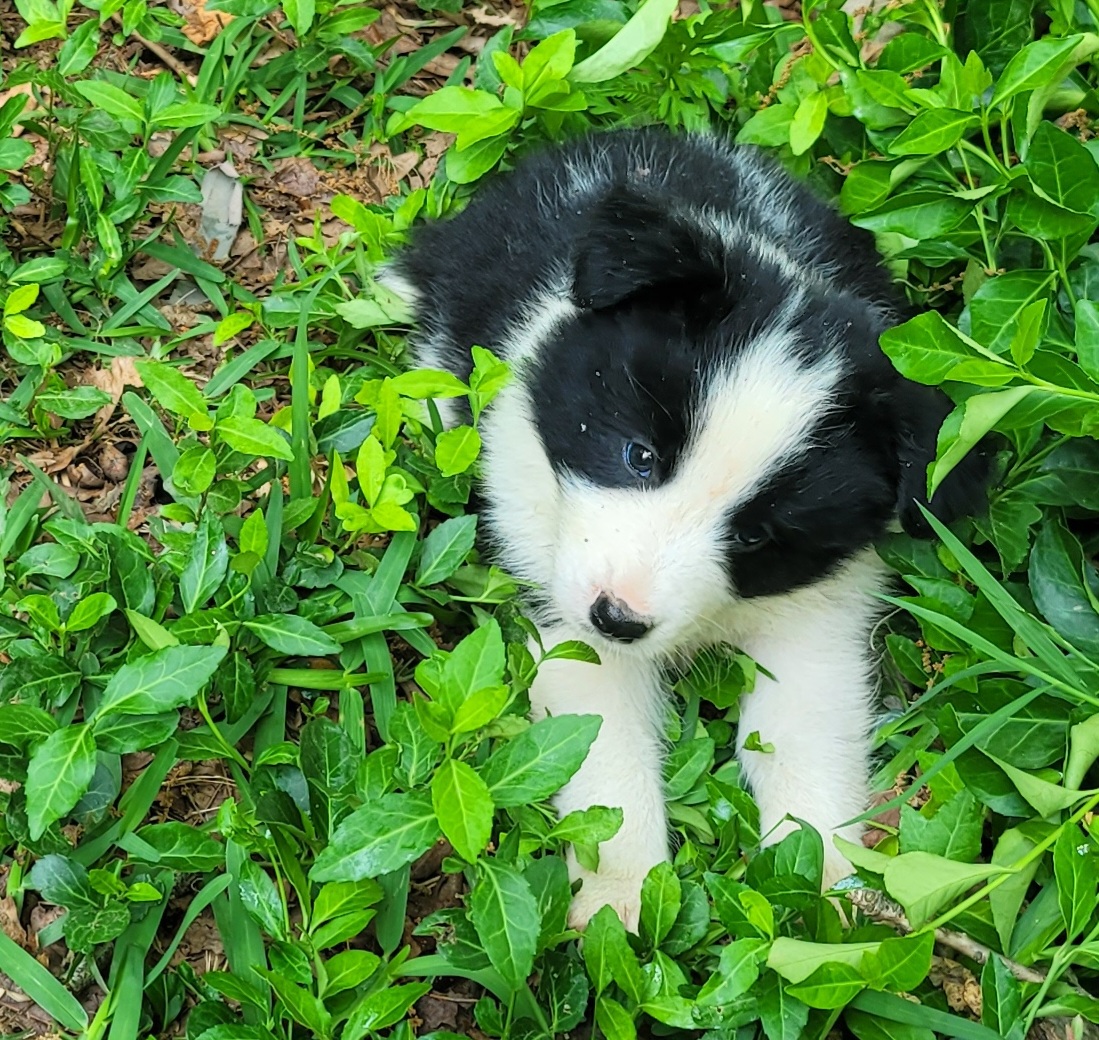
Science has turned the idea of dog age on its head, particularly when converting dog years and human years. If you want to convert dog years into human years you will need to accept something most of us long suspected: Dogs don’t age at the same rate as humans. In fact, their rate of aging is far different from humans. You probably noticed, puppies grow and develop physically and mental at a much faster rate that humans.
According to the new formula, a one year old dog is the equivalent of a 31 year old human! (Scroll down to see the dog years and human years chart).
Forget the seven year rule; it was always preposterous. No doubt, a one year old dog appears fully grown, with just some filling out left to do. A seven year old child will not be fully grown for another seven to nine years. That x7 formula just never worked for the first few years of a dog’s life. And a sixteen year old dog would be 112 in human years. It does not added up.

How Do Dogs Age?
Dogs front-load their aging, with early years rapidly bring maturity to the dog, and making him “middle-age,” in human terms, by 4-5 years old. Then around age five, their rate of aging begins to slow down significantly. Essentially, it is a non-linear or curved rate of aging, they don’t age in a straight line.
Here is the new non-linear formula or a logarithm:
Dog Age Conversion Formula: human age=16⋅ln(dog age)+31
Here is how it plays out from six months to 15 years of age, making radical changes from the 7 year straight-line formula.
Dog Years and Human Years Chart
| Dog Age (years) | Human Equivalent (years) |
|---|---|
| 0.5 | ~20 |
| 1 | 31 |
| 2 | ~42 |
| 3 | ~49 |
| 4 | ~53 |
| 5 | ~57 |
| 7 | ~62 |
| 10 | ~68 |
| 12 | ~71 |
| 15 | ~74 |
Why This New Dog to Human Years Formula Works
Following the mapping of the canine and human genomes, researchers discovered that our DNA has tiny chemical “tags” on it called methylation. [1] As a dog gets older, these tags change in a predictable pattern. For example those associated with growing in the puppy stage, are turned “off”once the puppy is mature.
Throughout the lifespan of the animal (in fact every mammal) various tags will turn off through the aging process. The pattern is so consistent that you can use it like an aging clock.
Samples of blood, skin or hair can give us an idea of where the individual: human, dog, or cat, is in their aging process. Specifically, it tells us how far a body has progressed from a flexible developmental state to a more fixed, aging state.
But Small Dogs Seem to Live Longer Than Large Breed Dogs
Researchers are aware of the discrepancy between lifespans of giant breed dogs (6-8 years) and toy dogs (14-19 years). They are currently exploring overall weight and how that might affect aging in dogs. Caloric intake is another area of focus. The study that produced the chart above was based on Labrador Retrievers, who live an average of 12 years, which corresponds well with worldwide average human lifespans of 70 years.
Researchers are also creating breed specific charts as well as species specific charts. These new studies show that aging aligns across species based on developmental methylation changes, not just lifespan ratios.
How We Can Use This Information in the Future
Breeding decisions: breeders will be able to select slower aging dogs for their breeding stock, in addition to genetics and phenotype.
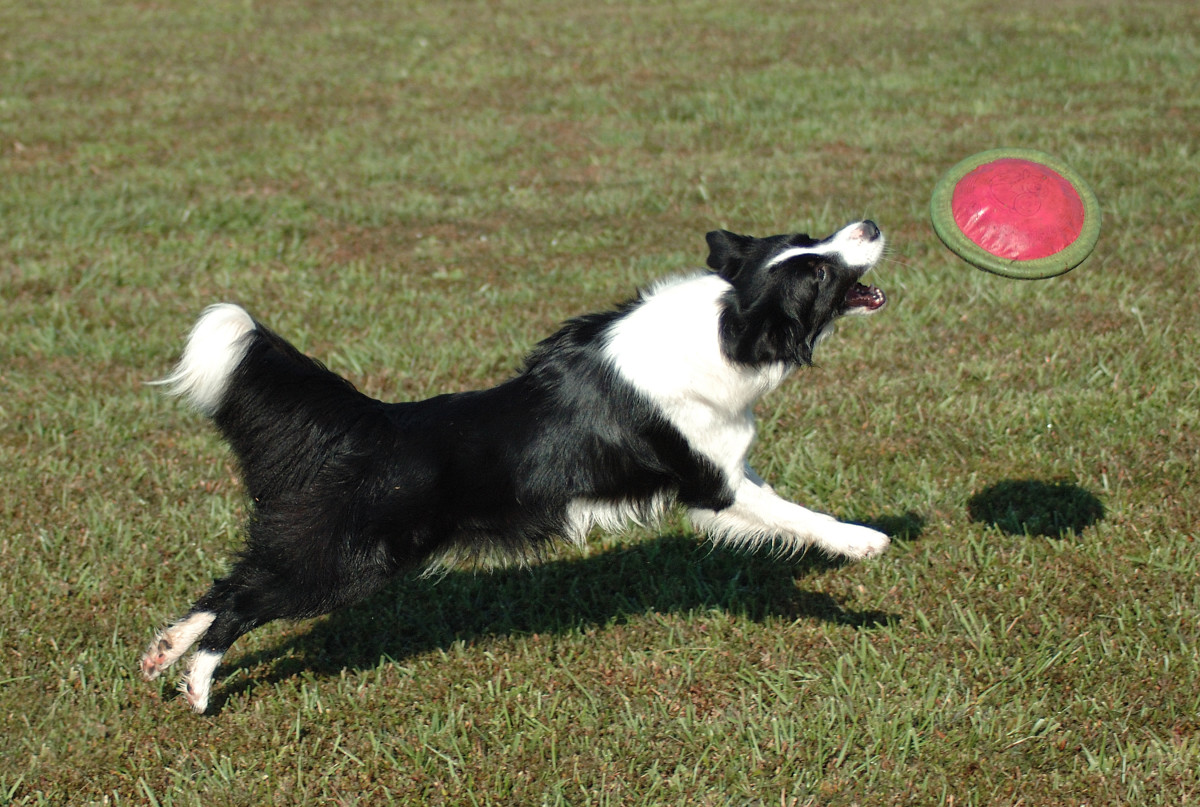
There is an old breeder maxim that may now have new relevance. Dogs who are slow to mature, tend to live longer. I have seen that within my own breed, the border collie. Some lines appear mature by six months of age. Those rapid to mature dogs tend to age rapidly in later years, with them looking and moving like 14 year old dogs, when they are just eight or nine years old.
In the future, breeders may be able to select breeding stock based on metrics (slower epigenetic scores) that favor slower to age dogs. After all, we all wish our four legged friends would stay with us a little longer. Now we may be able to select breeding stock who will do just that. Lifespans that give us another four to five healthy years with out best friends!
Sources and Further Reading
Reference: Wang T, et al. Quantitative translation of dog-to-human aging by conserved remodeling of the DNA methylome. Cell Systems. 2020;11(2):176-185.e6. doi: 10.1016/j.cels.2020.06.006.
Proceedings of the National Academy of Sciences (2022)
https://pmc.ncbi.nlm.nih.gov/articles/PMC9173771/