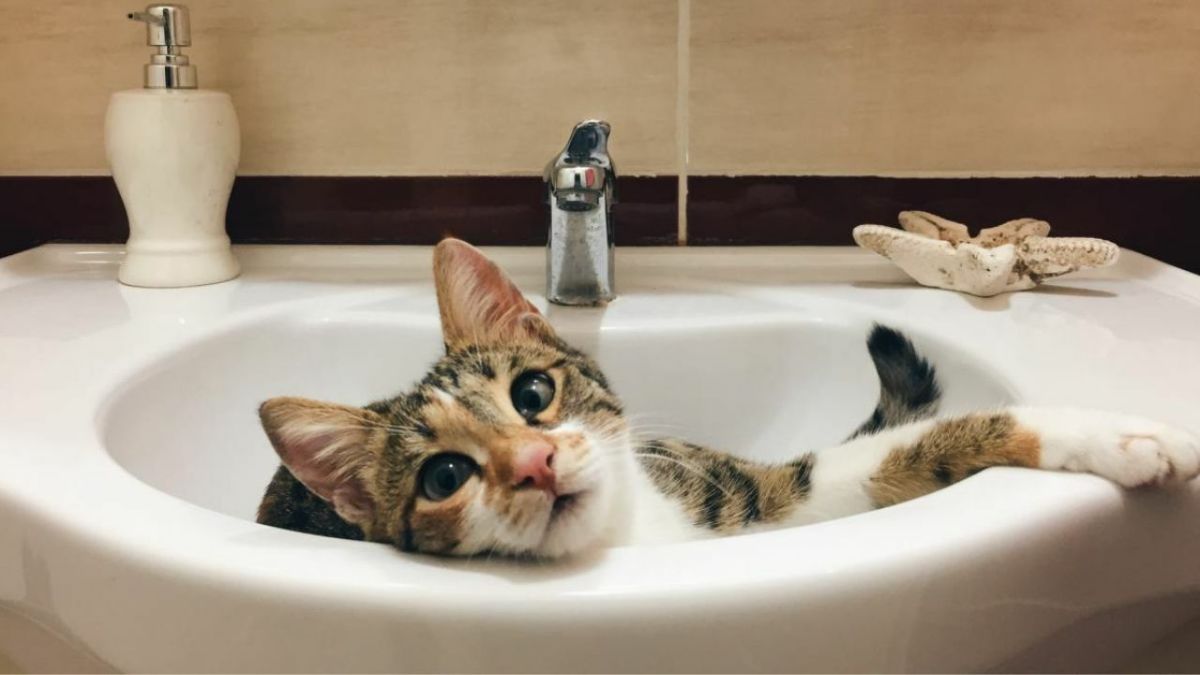
Why does my cat sometimes decide to pee in the sink? Due to their meticulous cleanliness, cats may avoid using the litter box if it’s dirty or placed in an unfavorable location. Urinating in the sink is a hygienic substitute for using the litter box. Stress or past negative experiences with the litter tray can also lead to this behavior—for example, instances of diarrhea or experiencing pain while urinating. Read on to learn about the top five causes of your cat’s urinating in the sink.
Reasons Your Cat Pees in the Sink
- The Sink Is More Hygienic
- Your Cat May Be Stressed
- Because They Hate Their Litter Box
- They Are Marking Their Territory
- Your Cat Might Be Sick
1. The Sink Is More Hygienic
Cats are notoriously clean animals, so your cat may pee in the sink because it is cleaner and more comfortable than a litter box.
- A sink is often smooth and non-porous, meaning bacteria and smells are less likely to stick to the surface.
- The sink’s cool, damp environment is plausibly more inviting than a dry, dusty litter box.
- Plus, litter boxes can quickly accumulate unpleasant odors and bacteria if not cleaned regularly.
If it’s a hygiene issue, try cleaning the box more frequently or using a new kind of box—one made of ABS plastic, for example. The PetFusion BetterBox is more appealing because its smooth surface is non-stick and pet-friendly. It’s much easier to clean than regular polypropylene litter trays. So you can help reduce any odor that might be causing them to avoid the box.
2. Your Cat May Be Stressed
Your cat could be peeing in the sink because it is feeling anxious. Because cats are susceptible to environmental changes, even small changes can stress them out.
Some Common Causes of Stress
- Sudden changes in routine: Have you noticed that cats prefer familiar patterns because they are creatures of habit?
- Changes in the home environment: Some animals feel threatened by changes like new pets, furniture, or people.
- Exposure to loud noises: Did you know that felines have sensitive hearing? They might feel startled by loud noises like fireworks or thunderstorms.
Tips to Help Them Feel Calmer
If your kitty seems stressed, it might behave strangely, including doing things like peeing in the sink. To help reduce their anxiety:
- Make a safe and comfortable environment and keep the daily routine as consistent as possible.
- Consider using a Feliway diffuser, a product that emits an artificial version of the feline facial pheromone. As a result, stressed kitties feel safer and calmer.
- Make sure that your pet gets plenty of playtime and affection every day.

3. They Hate the Litter Box
When a cat urinates in the sink, it often implies they’re displeased with their litter box. Felines can form negative associations with their litter box, particularly if they have had problematic experiences previously.
For example, following a urinary tract infection, some kitties may associate the litter box with diarrhea or painful urination. Sometimes, they also find the texture of the litter uncomfortable or the smell unpleasant.
If your cat pees in the sink, or other places outside of the litter box, try using unscented litter, unclumping litter instead of clumping. Or, try a different brand and test the response. Keeping the box in a quiet and low-traffic room may also be helpful. Some cats feel overwhelmed by too much noise or activity near their bathroom.
4. They Are Marking Their Territory
Cats are territorial animals—they often mark their territory by urinating in certain areas. This behavior is prevalent in males, who may feel the need to establish their dominance and claim objects as their own.
If your cat urinates in the sink, try providing them with other objects to mark their territory. This distraction will help prevent them from using the bathroom sink as their designated spot. Try offering scratching posts and litter boxes to establish their environment instead.
Promptly cleaning up any messes can help deter them from returning to the same area. In addition, shower your kitty with plenty of love and attention so they don’t need to mark their territory in your sink!

5. Your Cat Might Be Sick
Your cat may be peeing in the sink because of underlying health issues. Suppose they are having difficulty urinating in their litter box; they may find it easier to pee in the sink if it is easier to access.
In this case, please take your cat to the vet as soon as possible. It could be a sign of a urinary tract infection or other medical condition that requires treatment.
Besides urinating in the sink, there are a couple of other concerning behaviors to look out for:
- Signs of pain when they urinate, including howling or vocalizing: please take them to a vet immediately.
- Changes in your cat’s bathroom habits, i.e., increased frequency of urination or excessive grooming of their genital area.
Unusual or worrying behaviors might imply a medical issue you must discuss with a veterinarian.
Final Thoughts
Why does my cat pee in the sink? Cats may choose the sink when stressed, in pain, or unhappy with a dirty or poorly placed litter box. If you have further questions or concerns about your pet’s health or behavior, please book an appointment with your vet for investigation.
Sources and Further Reading
- Feline Behavior Problems: House Soiling | Cornell University College of Veterinary Medicine
Information and advice on dealing with feline house soiling problems, the most common behavior problem reported by cat owners.