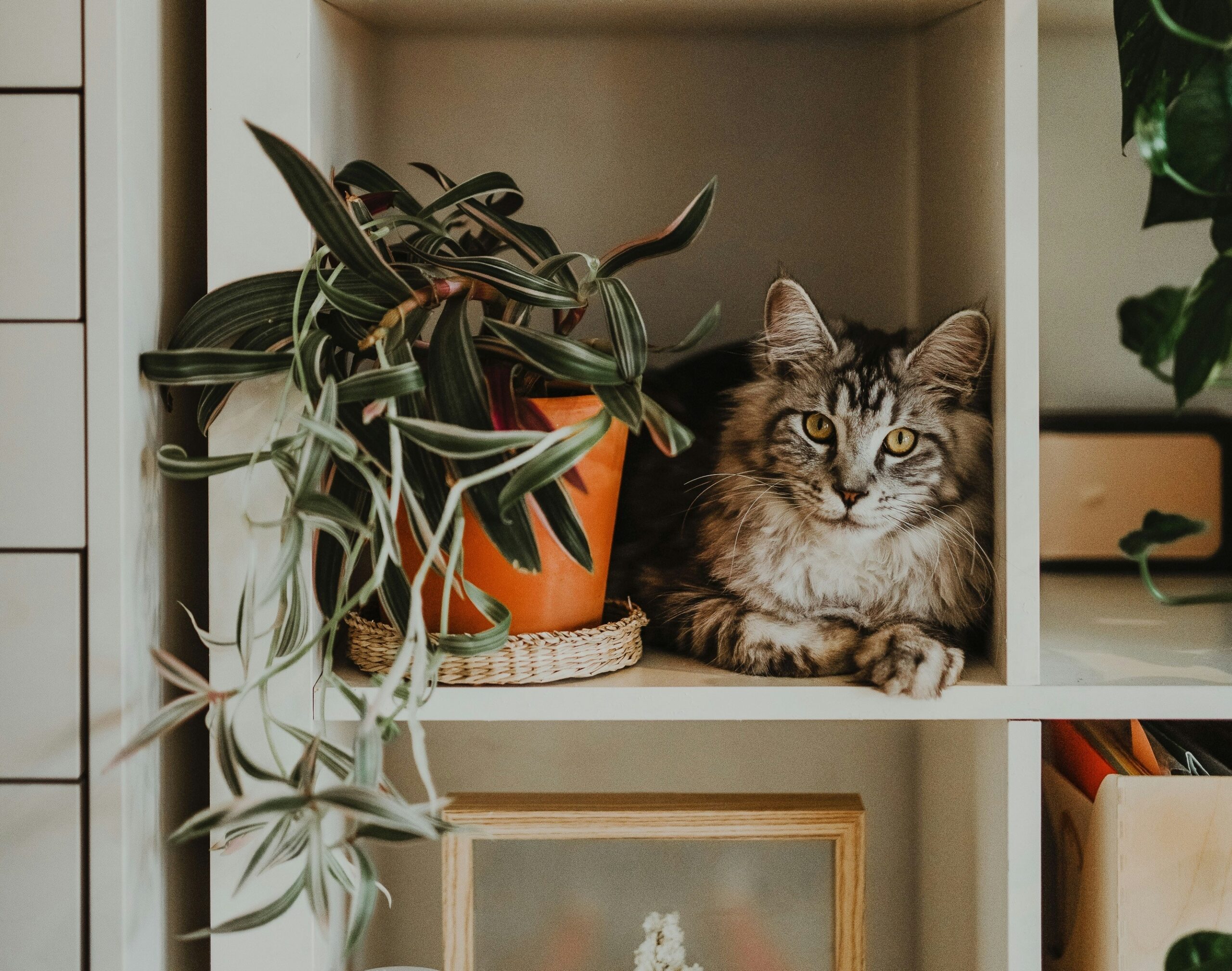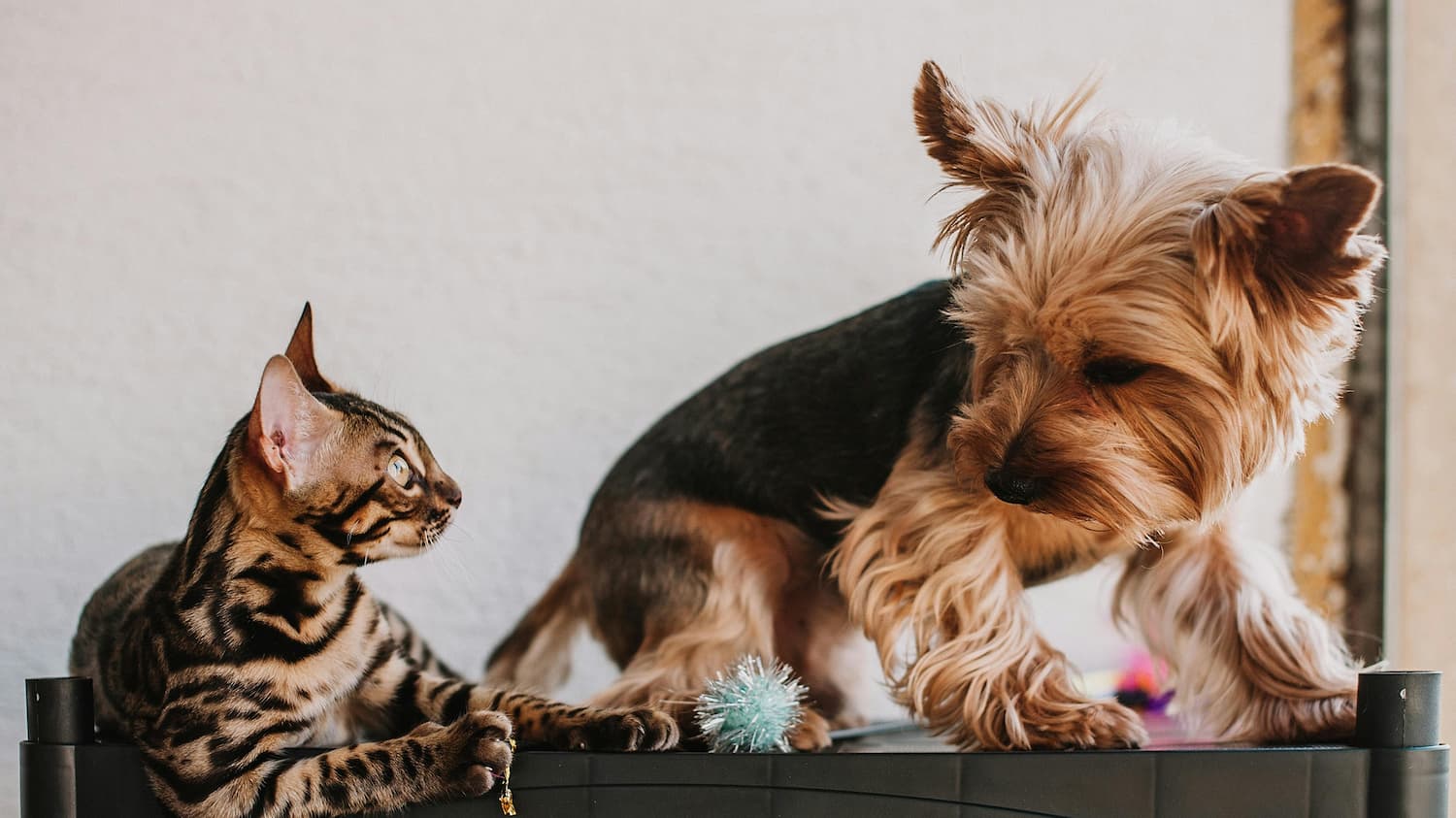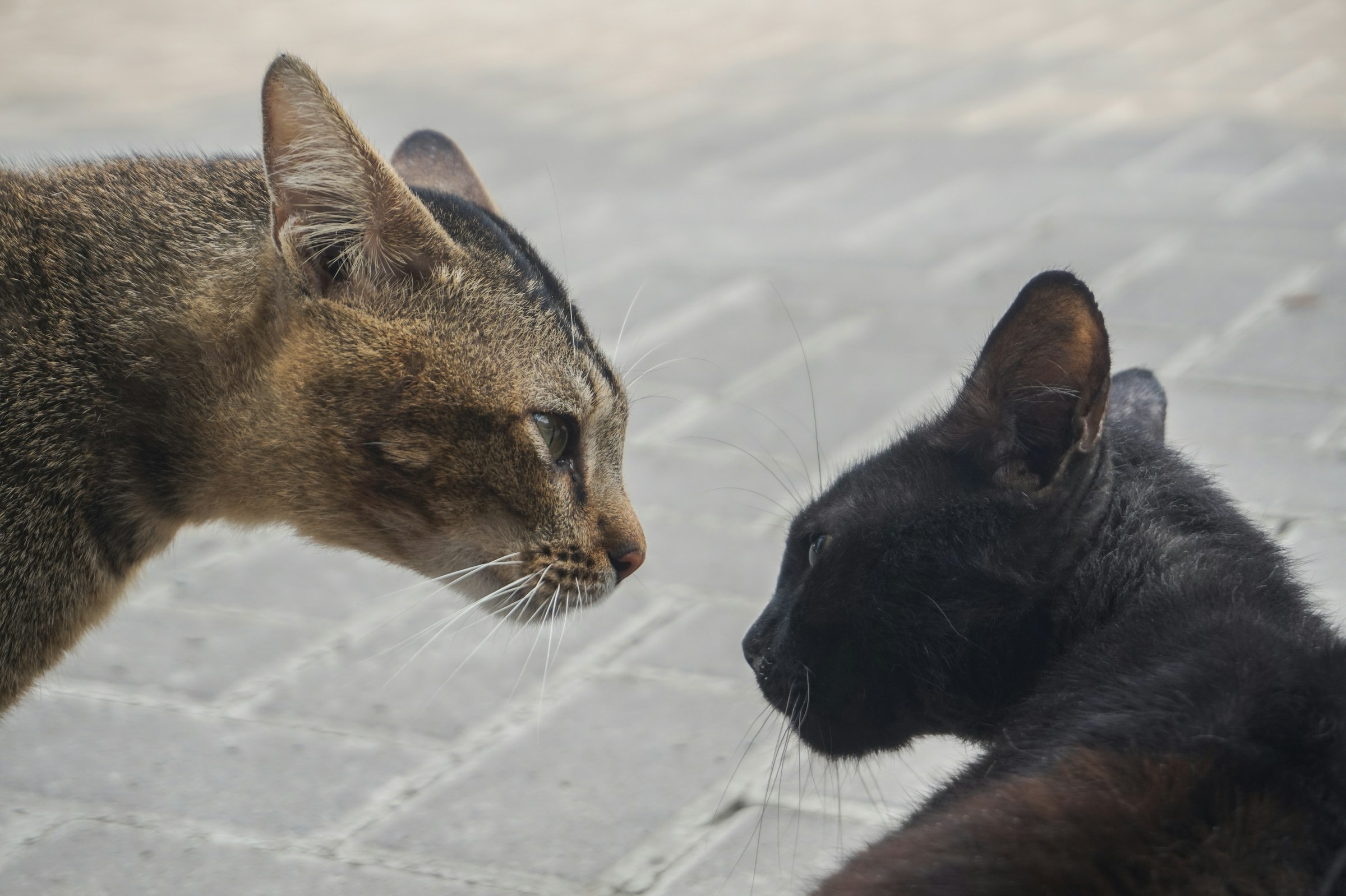
Cat owners generally rely on their cat’s behavior to guess how their cat is feeling. Is he eating? Hiding? Purring? But by the time a cat changes its behavior noticeably, the underlying emotion — or medical problem — may have been building for days.
Veterinarians have long known something most owners don’t: the fastest way to read a cat’s emotional state is looking at its face.
And now, thanks to a research team in Montreal, the exact tool they use for reading cat faces is free and available to anyone willing to spend a few minutes learning it.
Keep in mind, cats don’t meow at each other, only at people who stubbornly refuse to learn their language. Cats use their 276 different facial expressions to communicate with one another, and now you can learn what they have been trying to tell you all along.

Reading Cat Faces with The Feline Grimace Scale: Five Things to Watch
In 2019, a team led by Dr. Paulo Steagall at the University of Montreal published a validated pain-assessment tool in Scientific Reports called the Feline Grimace Scale (FGS). Originally designed for clinical use, it’s also built to be learnable by non-professionals, and it works for reading cat emotional states far beyond just pain. (Scroll down for the link to the training).
The scale focuses on five specific areas of the cat’s face:
Ear Position: the single most expressive feature on a cat’s face.
- Forward and upright means the cat is relaxed or curious.
- Slightly rotated outward mean the cat is feeling uneasy.
- Fully flattened ears expresse fear, aggression, or pain.
Muzzle Tension
- A soft, round muzzle signals contentment.
- A tense, angular muzzle with visibly tightened muscles indicates distress. This one is subtle, but once you see it, you can’t unsee it.
Orbital Tightening or Squinting
- Relaxed, open eyes demonstrate comfort.
- Wide open eyes with dilated pupils indicates excitement or fear.
- A tightened, half-closed eye — when the cat isn’t drowsy — is one of the most reliable stress and pain indicators cats display. Don’t confuse this with the slow blink, which means something very different (more on that below).
Whisker Position
This is the indicator almost every cat owner overlooks!
- Whiskers fanned forward signals interest or engagement.
- Pressed flat against the cheeks demonstrates fear or pain.
- Hanging loosely to the sides means the cat is calm and relaxed.
Head Position
- Upright and forward signals confidence.
- Dropped or tucked below shoulder line indicates pain, fear, or withdrawal.
The Feline Grimace Scale website offers free training images, scoring sheets, and instructional guides. Just a few minutes of practice dramatically sharpens your eye. (see the link to the Feline Grimace Scale website below).

The Cat Slow Blink The One Expression You Can Use Back
Most of the Grimace Scale is about reading your cat. But one trick of feline facial communication actually works in both directions, the cat slow blink.
A 2020 study from the University of Sussex, published in Scientific Reports, confirmed that the slow blink is a real, two-way communication signal. Researchers found that cats were significantly more likely to slow-blink back at owners who slow-blinked first. Even more remarkable, cats were more likely to approach a stranger who used a slow blink versus one with a neutral expression. It turns out that this is a signal used across numerous species.
The mechanics of the slow blink are simple: soften your gaze, close your eyes slowly and deliberately for about one to two seconds, then reopen them. If your cat returns the gesture, congratulations — that’s one of the few scientifically validated forms of human-to-cat conversation. The signal it conveys, “You can trust me.”
Why This Matters More Than You Think
A recent study found that cats use 276 distinct facial expressions — and that only about 13% of people can read them accurately. (See if you are a cat whisperer here, now that you know the secrets.) It appears that the gap between what cats communicate and what humans understand is enormous. However, it’s not fixed. The Feline Grimace Scale exists to close that gap, and the research shows it works.
Learning these five markers won’t make you fluent overnight. But it will make you the most observant person in any room full of cat owners — and more importantly, it might help you catch a health problem before your cat has to suffer through it in silence.
Final Thoughts on Reading Cat Faces
What else can you do to learn your cats language? If you live in a multi-cat household, watch your cats interact. As we noted earlier, the Lyon College study found and documented some 276 expressions exclusively during cat-to-cat encounters, meaning the richest display of feline facial communication happens between cats, not between cats and people. Multi-cat households can be your built-in training ground. Just pay attention to what each cat’s face does before, during, and after their social exchanges.
If you have the time, try the Feline Grimace Scale training tonight and look at your cat’s face with fresh eyes. Then come back and tell us in the comments — what did you notice for the first time? If you tried the slow blink, how did your kitty react?
We think every cat owner should know this tool exists. So, feel free to share this article with someone whose cat “never shows them how it is feeling.” And finally, if this information changed how you look at your cat, hit the like button, so more cat lovers can find it!
References
- Evangelista, M.C., Watanabe, R., Leung, V.S.Y., Monteiro, B.P., O’Toole, E., Pang, D.S.J., & Steagall, P.V. (2019). Facial expressions of pain in cats: the development and validation of a Feline Grimace Scale. Scientific Reports, 9, 19128. https://doi.org/10.1038/s41598-019-55693-8
- Humphrey, T., Proops, L., Forman, J., Sherber, R., & McComb, K. (2020). The role of cat eye narrowing movements in cat–human communication. Scientific Reports, 10, 16503. https://doi.org/10.1038/s41598-020-73426-0