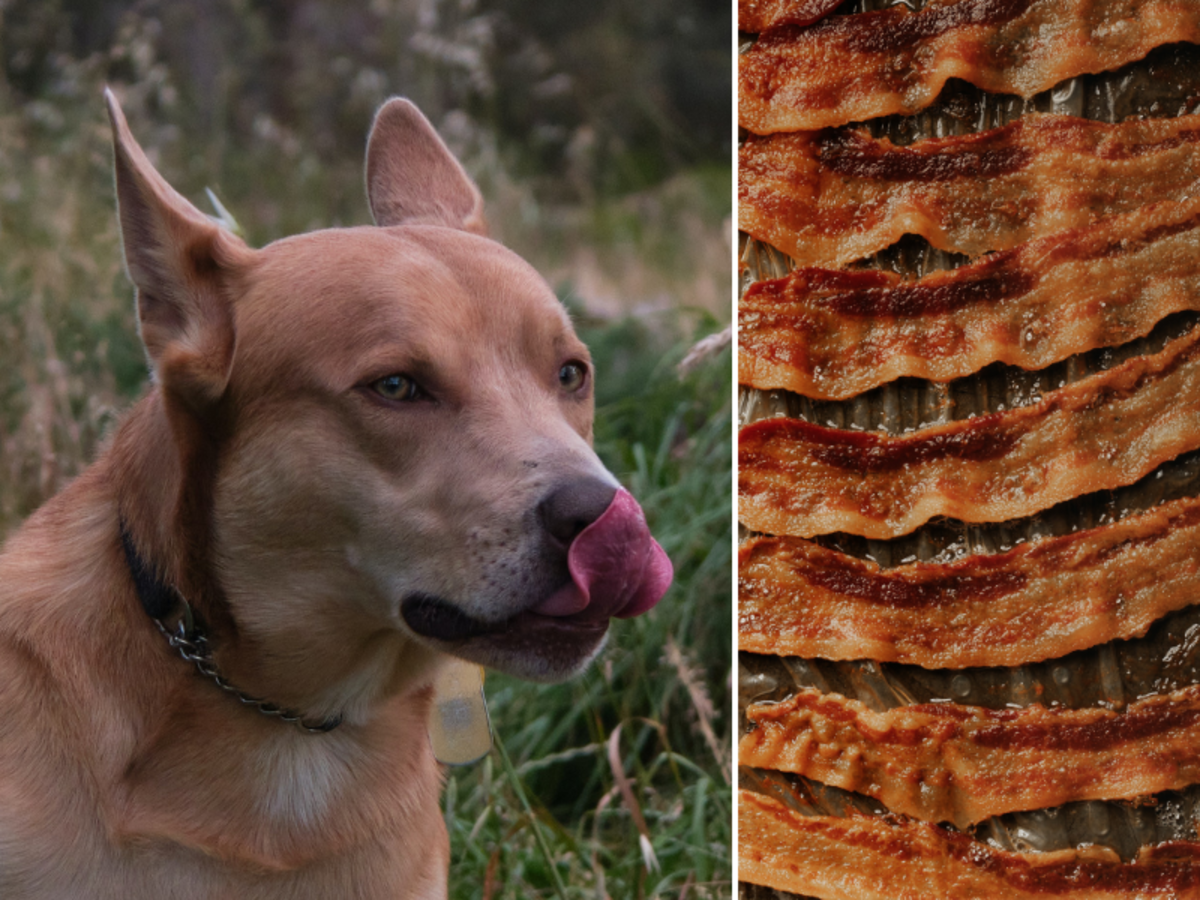
Bacon is a favorite food for many of us. It’s crunchy, salty, smoky, and yummy. Maybe, when you’re eating some, your dog looks up at you, and offering them a piece is tempting to make them happy. Can dogs eat bacon? It’s best avoided because the fat, salt, and additives can harm them. Small, rare amounts are safest. You may be putting your pet at risk, even by offering a small piece. Let’s look at some of the health risks and healthier alternatives we can treat our four-legged friends to instead.

The Dangers of Feeding Bacon to Dogs
Bacon is a type of cured pork that is usually smoked and sliced. It is high in fat, salt, and sometimes other additives like sugar, nitrates, or preservatives. While these ingredients make bacon a tasty human food, they are not healthy for dogs.
Here are four known dangers associated with feeding dogs bacon:
1. Excess Fat Can Cause Pancreatitis
A dog’s diet should contain some fat. But too much can lead to obesity, heart disease, diabetes, and other health issues. Excess body fat can also contribute to pancreatitis, a painful and potentially fatal pancreatic inflammation. Canines can suffer vomiting, diarrhea, appetite loss, dehydration, fever, and shock.
2. Too Much Sodium Can Cause Salt Poisoning
While sodium is also a necessary nutrient for animals, too much can be harmful. It can sometimes result in salt poisoning, dehydration, high blood pressure, and kidney damage. Salt intoxication can cause vomiting and diarrhea. But more seriously still, seizures, a coma, and even death.
3. Bacteria Can Cause Food Poisoning
Bacteria like Salmonella or E. coli, which can cause food poisoning in dogs, can be found in raw or undercooked bacon. Food poisoning symptoms include vomiting, diarrhea, fever, lethargy, and dehydration.
This situation can be serious and requires veterinary attention. So, if you do give your pup some bacon, please make sure it’s thoroughly cooked!
4. Additives Can Cause Cancer
Some bacon products might include artificial nitrates, sweeteners, flavors, colors, or preservatives that are unsafe for dogs. Nitrates improve bacon’s color and flavor while inhibiting bacterial growth. But they can also lead to the creation of nitrosamines in the body, which are substances that cause cancer.

The Side Effects of Giving Bacon to Dogs
A little bit of cooked bacon now and then won’t harm your dog much. But if they devour a large amount or eat it frequently, it may cause side effects.
Bacon can affect dogs in two distinct ways:
1. Vomiting and Diarrhea
Some dogs may have sensitive stomachs and cannot tolerate fatty or salty foods like bacon. Eating too much bacon can cause gastrointestinal upset and vomiting, and diarrhea. Dehydration and electrolyte imbalance could result.
2. Obesity and Related Diseases
Giving your dog too much bacon could cause weight gain and obesity. Overweight dogs face a higher risk of diabetes, arthritis, heart disease, and cancer. Besides, obesity can lower your pet’s quality and lifespan.
Bacon may be a delicious treat for us, but for dogs, it can lead to major health problems.
Can Dogs Eat a SMALL Amount of Bacon Safely?
The amount of bacon that a dog can eat without getting sick ultimately depends on its size, age, breed, health, and level of activity.
But a general rule of thumb is to limit bacon to no more than 10% of your dog’s daily calorie intake. For example, if they need 500 calories per day, you should not give them more than 50 calories in bacon (about one slice).
This doesn’t mean it’s okay to give your dog one slice of bacon every day. It should be an occasional treat, not a regular part of your dog’s diet. Giving them too much or too often will likely cause health problems.
Healthier Alternatives to Bacon for Dogs
There are many healthier alternatives to bacon if you want to give your pet a tasty and nutritious treat. Here are five to consider:
1. Cooked Chicken
Chicken is a low-fat protein source that is rich in amino acids. Feeding it to your dog helps them build muscle and maintain a healthy weight. You can give your pet plain chicken without bones, skin, or seasonings.
2. Cooked Eggs
Another excellent source of protein for dogs is eggs. They also contain healthy fats, vitamins, and minerals that support your dog’s skin, coat, and immune system. Try giving your dog boiled or scrambled eggs without salt, butter, or oil.
3. Carrots
Carrots may not be as attractive to dogs as bacon, but they still provide crunch and sweetness. They also contain significant amounts of beta-carotene, vitamin A, and fiber, all of which are good for digestion, eyesight, and general health. You can offer your dog raw or cooked carrots, cut into bite-sized pieces.
4. Apple Slices
Apples are a tasty, refreshing fruit high in fiber, vitamins, and antioxidants, and can help dogs stay hydrated. They also assist with teeth cleaning and breath freshening. Your dog can safely consume apple slices without seeds or cores.
5. Peanut Butter
Most dogs enjoy peanut butter. It contains protein, healthy fats, and vitamin E, which benefit their skin, joints, and muscles. As a reward or to add more fun, you can stuff some unsalted, unsweetened peanut butter into a toy and give it to your dog.

Homemade Dog Treats
Do you enjoy baking at home? A wonderful way to show your dog your love and care is by making him treats. You can choose the ingredients, customize the snacks according to your dog’s preferences, and save money.
There are many more easy and healthy dog treat recipes online or in books. You could use cookie cutters or molds to make fun shapes. Some common ingredients for homemade dog treats include oat flour, rolled oats, applesauce, pumpkin, peanut butter, cranberries, and cheese.
Be careful to stay away from harmful ingredients such as xylitol, macadamia nuts, raisins, grapes, onions, and chocolate. Also, follow the recipe directions and bake the treats until crisp and dry. Their shelf life will increase, and mold growth will be prevented.
Final Thoughts on ‘Can Dogs Eat Bacon?’
Dogs may enjoy the taste of bacon, but it isn’t nutritious for their health. It contains a lot of fat, salt, and sometimes harmful additives that can be dangerous if eaten too much or too often.
By all means, give your dog bacon occasionally as a special treat, just not too much. There are many healthy alternatives you could offer instead.
Before introducing new foods, please talk to your vet first. They can make recommendations based on your dog’s age, breed, size, health, and nutritional needs.
Sources and Further Reading
- Can Dogs Eat Bacon Safely? What Are the True Risks? | AZ Animals
Dogs love bacon just as much as humans do, but is it good for them? Our expertly researched guide tells you everything you need to know. - Can Dogs Eat Bacon? | Pure Pet Food
Can dogs eat bacon raw? No, your dog shouldn’t eat bacon raw. Although raw bacon is technically “safe” for a dog to eat, it is more likely to make them sick. - Advice From a Vet: 10 Foods to Never Feed Your Pet | Jacksonville Community Pet Clinics
Bacon, bacon grease, ham, and fat trimmed off meat or bones contain a lot of salt and/or fat, and at the least can cause indigestion, vomiting, and diarrhea in both dogs and cats. - Can Dogs Eat Pork? | American Kennel Club
Find out how to feed pork safely to your canine and why cured, salted, or raw pork could be potentially dangerous to your pup.