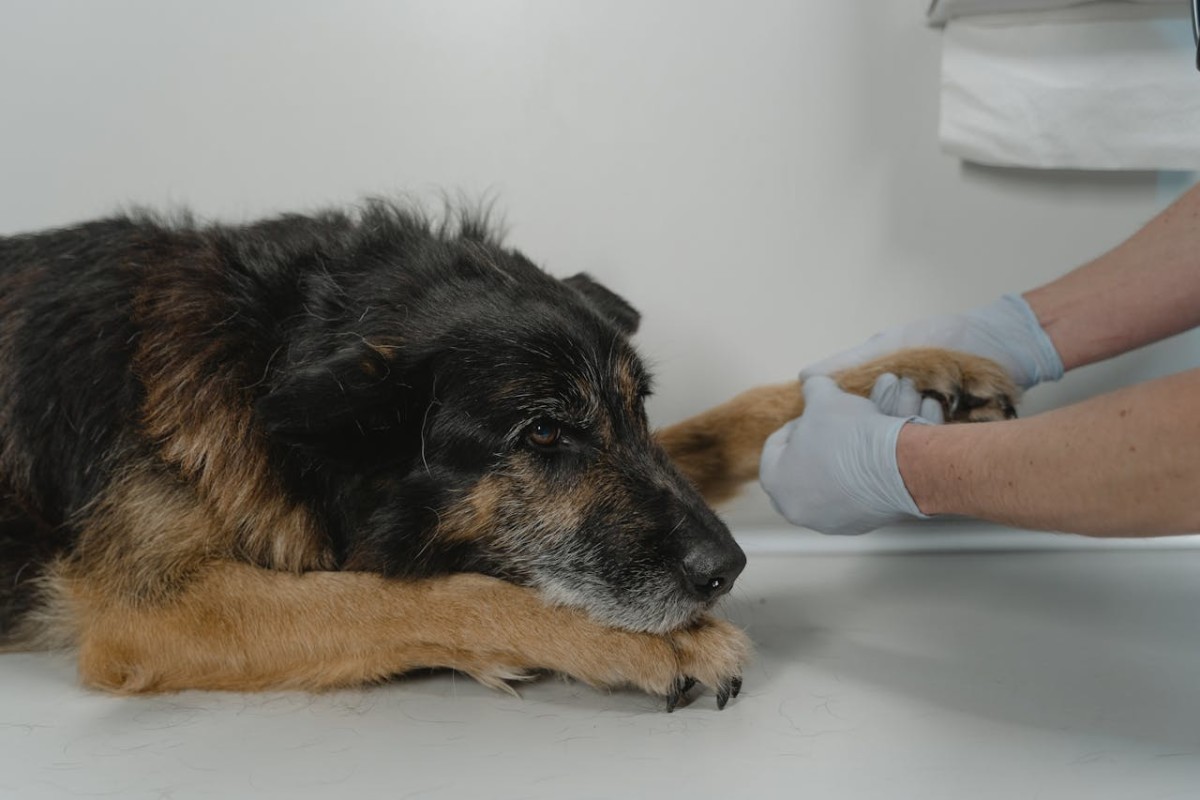
Seeing our beloved pets in pain can be a heart-wrenching experience. If your dog has a broken toe, you’re probably keen to help them recover comfortably at home. The following practical tips and advice will help you make this process as smooth as possible.
In This Article
- How Can I Tell If My Dog Has a Broken Toe?
- What Should I Do to Treat My Dog’s Broken Toe at Home?
- How Long Does It Take for a Dog’s Broken Toe to Heal?
- How Much Does Surgery Cost?
How Can I Tell If My Dog Has a Broken Toe?
First things first: how do you know if your dog has a broken toe?
Common Symptoms
It helps to start by looking for indications like limping, swelling, and a reluctance to put weight on their affected paw. The dog might also lick or chew at his injured toe, as an attempt to put right what feels unusual and uncomfortable. In many cases, you may catch the toe looking strange: misaligned or swollen. While these indicators are pretty common, a professional diagnosis is always the right approach because then you can confirm the severity of the injury.
Initial Steps to Take
When you suspect a dog has a broken toe, two things are really important to do:
- Keep your dog calm and steady
- Call the veterinary clinic
Step 1: You want to talk to your pup softly and carefully restrict their movement. To stabilize it temporarily, you can carefully wrap the paw with a soft bandage or clean pillowcase. But please be careful not to wrap it too tightly. Doing this can help prevent further injury and put your dog in a stable enough condition so you can now take the next step.
Step 2: Next, call your vet’s clinic and explain what happened. In some cases, especially with small dogs or when one metacarpal or metatarsal bone is intact, a thick bandage might be all that’s needed to support the toe during healing. However, your vet will likely ask you to bring the dog in for further analysis and treatment. If the toe is fractured, a splint may be required.
Important! Please don’t attempt to apply a splint on your dog’s paw without your vet’s help. Immobilizing an animal’s limb without proper knowledge and guidance can potentially cause more harm than good.

What Should I Do to Treat My Dog’s Broken Toe at Home?
There are a few things you can do at home to help support your pet’s recovery as their fractured paw heals. In all cases, please work closely with your vet and follow all their recommendations to ensure your pet’s safety and optimal healing.
- Keep the area clean
- Watch for infection signs
- Work with your vet to use a splint
- Offer appropriate pain relief and comfort
Keep the Area Clean
It’s important to keep the injured toe clean to prevent infection. You can gently clean the area with a mild antiseptic solution. VCA Animal Hospitals says to combine two cups (500 mL) of water with around one level teaspoon (5 mL) of salt (or Epsom salts). In certain situations, your vet could advise using an iodine solution, surgical soap, or a diluted chlorhexidine solution to help remove debris around your dog’s injured limb. Also, the bandage should always be replaced if it gets wet or dirty.
Watch for Infection Signs
Look for any indicators of infection, including expanded swelling, redness, or discharge. Give your vet a call right away if the situation worsens.
Work With Your Vet to Use a Splint
Fractures in the paws of dogs and cats heal slowly without surgery, as veterinarian Dr. Anne Sylvestre explains in this video. Splints are the best treatment for these fracture types, particularly if the metatarsal or metacarpal is intact.
The splint will help to immobilize the toe and properly support the joint during healing. Regular checks are necessary to ensure the mobilizing device is not too tight and to monitor for any signs of discomfort.
Typically, vets recommend leaving the splint on for about 4-6 weeks, with frequent follow-ups and possibly X-rays to assess healing progress. Your vet will likely replace the splint every one to two weeks. In some cases, the splint may need to be left on longer, depending on the healing speed, which can vary. This is especially true since the metacarpal and metatarsal bones tend to have a poor blood supply, and recovery may be slower.
Your vet will provide instructions on how to apply and care for the correct type of splint. During this process, remaining vigilant can be challenging, but it is essential for optimal healing.
Offer Appropriate Pain Relief and Comfort
You should definitely ask a vet about appropriate pain relief options. Applying an ice pack wrapped in a cloth to the injured area for 10-15 minutes several times daily can help reduce swelling. Your vet might prescribe pain medications, including non-steroidal anti-inflammatory drugs (NSAIDs) like carprofen (Rimadyl), meloxicam (Metacam), or deracoxib (Deramaxx) to help them feel more comfortable. You never want to give human pain medications like aspirin or ibuprofen because they can be harmful to canines.
Herbal Remedy Option: Comfrey, aka “Knitbone”
Your Pets at Home’s Barbara Fitzgerald, an esteemed AKC Breeder of Merit, says she has had success using Symphytum officinale (comfrey), sometimes called “knitbone,” to support healing after bone injuries in her dogs. Some holistic veterinarians recommend this traditional homeopathic remedy to “knit” broken bones. If you are curious about this herbal remedy, you may submit a question to Barbara about her personal experience by clicking here. As always, please speak with your veterinarian before using any herbal or homeopathic product with your dog.

How Long Does It Take for a Dog’s Broken Toe to Heal?
The recovery time for a dog’s broken toe can vary depending on the severity of the injury and the dog’s age.
Healing Process
Generally, it takes about 4-8 weeks for a dog’s broken toe to heal. However, for adult dogs and cats, it can sometimes extend to 8-12 weeks because of the slower healing of the metacarpal and metatarsal bones. Interestingly, puppies tend to heal faster, so you might expect a quicker recovery if your dog is young.
Monitoring Your Dog’s Progress
During the recovery period, it’s important to limit your dog’s activity. You’ll need to keep them from jumping or running, and take them on short, controlled walks. Regular check-ups with your vet will help ensure the toe is healing properly.
For the best results:
- Limit your dog’s activities for around four to six weeks – that means no leash walks, jogging, or jumping. If your dog becomes too active, they could risk further injury.
- After going outside for bathroom breaks, they should return indoors, ideally staying in a crate or a small, secure area.
How Much Does Surgery Cost?
In some cases, surgery might be necessary to treat a dog’s broken toe properly.
Financial Considerations
The cost of surgery for a dog’s broken toe can vary widely, ranging from $500 to $2,500 or more. This amount largely depends on the severity of the injury, the type of treatment required, and whether you visit a general practice or specialty hospital. Discussing all options with your vet is important to determine the best course of action for your pet. This point is particularly relevant if the injury is severe or healing is slow because of poor blood supply.
Additional costs may include:
- Initial veterinary exam: $50-$200
- X-rays: $100-$300
- Splint application and changes: $55-$150 per visit
- Follow-up appointments every 1-2 weeks
- Pain medications and antibiotics
Patience Is Key
Helping your dog recover from a broken toe at home can be challenging. Unfortunately, we can’t explain to them (like we would with a child) why this is happening or why they feel pain. But we can certainly offer them assurance and love, alongside the right care and attention to manage their pain and help them heal.
Even if you don’t see immediate callous formation at eight weeks, it’s perfectly normal. Healing takes time, especially for bones with a poor blood supply like the metacarpals and metatarsals. It makes sense to always work with your vet to obtain the most suitable advice and treatment options.
Sources and Further Reading
- Staiger, C. (2012). Comfrey: A clinical overview. Phytotherapy Research, 26(10), 1441–1448. https://doi.org/10.1016/S1475-4916(10)00084-6
- Dog Broken Toe? Expert Answers from a Vet – Dr. Buzby’s ToeGrips for Dogs
- Fractured Toes in Dogs and Cats – Animal Surgical Center of Michigan
- Fracture of the Digit (Toe) in Dogs – PetPlace
- Care of Open Wounds in Dogs – VCA Animal Hospitals
- Toe Fractures in Your Pet’s Paws – BluePearl Pet Hospital