If you’re wondering how to build trust with your dog, Aleksandar’s experience with his Jack Russell Milo shows it often comes down to the quiet moments most of us overlook. Read on to learn more!
How to Build Trust With Your Dog: My Story
Your dog is being good right now, and you’re probably not saying anything.
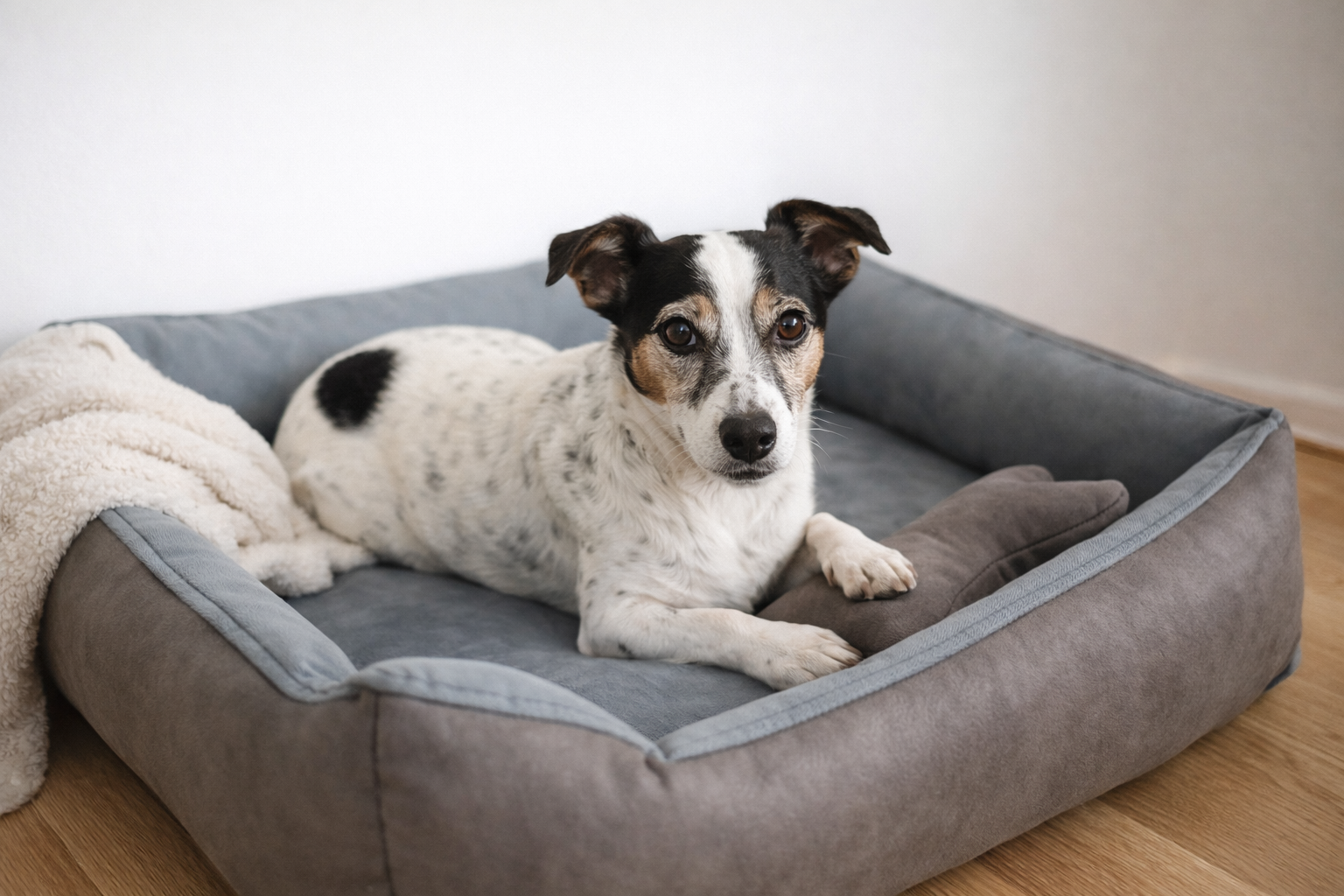
He’s in his bed. Calm. Not asking for anything.
You walked past him three times already.
I’ve done the same. I notice when my dog is doing something wrong, and I walk right past him when he’s doing everything right. It took me an embarrassingly long time to realize what that was teaching him.
Noticing What Calm Really Means
Milo is a nine-year-old Jack Russell. If you know the breed, you already know that calm is not their factory setting. Jack Russells are wired to move, investigate, and find a reason to be involved in whatever is happening. So when Milo chooses to lie quietly in his bed while I’m working, that is not nothing. That is a choice. And for a long time, I was greeting that choice with silence.
The Mistake We All Do
When Milo barks at the window, I respond. When he steals something off the counter, I respond. When he decides that 6 am is a reasonable time to demand a walk, I respond.
What He Actually Learned
When he lies quietly on his bed while I’m on a call, I do nothing.
So from his side, here is what he learned: being calm gets you ignored. Making noise gets you noticed. The math is not complicated. He wasn’t badly behaved. He was just working with the information I gave him.
Why We Miss These Moments
Most of us run this same loop without realizing it. We were never taught to acknowledge the good moments because they don’t feel like moments. They feel like the absence of a problem.
The dog is fine. Nothing is happening. There is nothing to respond to.
What’s Really Happening
But there is. There is a dog doing exactly what you would want him to do, with no reward and no recognition, waiting to find out whether that was worth it.
What a quiet “good boy” actually does
Last week Milo settled on his bed while I was on a long call. I glanced over, said his name, put my hand on him for two seconds, and went back to the call.
The Meaning Behind a Small Moment
That was the whole thing.
But what I told him in those two seconds was: I see you. Being calm is worth something. You don’t have to create a reason for me to notice you.
Why This Builds Trust
That is not nothing. That is the kind of small signal that builds a dog who trusts you in the quiet, not only when something is happening. A dog who knows that peace is safe.
That he doesn’t have to nudge or pace or create chaos to stay connected to you.
Different From Training
The trust that comes from those moments is different from the trust that comes from formal training. Training teaches a dog what to do. This teaches him how it feels to be with you.

More Quiet Moments Worth Mentioning
It’s not only the “dog in his bed” moment. Once you start looking, there are small windows like this throughout a normal day at home, and most of them pass without a word.
Calm Presence in the Kitchen
Your dog follows you to the kitchen and sits without being asked. He’s not begging. He’s just close. A glance down, a quick scratch behind the ear, and you’ve told him that being near you calmly is a good place to be.
Choosing Respectful Space
You’re reading on the couch and he settles at your feet instead of jumping up. He made a choice. He chose to respect the space.
If that goes unacknowledged every time, he learns that the polite version of being close gets him nothing. So eventually he stops offering it.
Settling After Excitement
You come home and he’s excited, but after a minute he settles down without being told. That moment right there, when the energy drops and he lies down on his own, is one of the most overlooked moments in a dog’s day.
A calm voice, his name, a slow stroke down his back. You just reinforced the thing you actually wanted.
Waiting at the Door
He waits at the door before going outside instead of bolting through it. You didn’t ask him to. He just did.
That deserves something, even if it’s just eye contact and a low, easy “good boy.”
Why These Moments Matter
None of these requires stopping what you are doing for more than a few seconds. None of them require treats, training gear, or a plan. They just require noticing and then saying something.

The same principle follows you outside
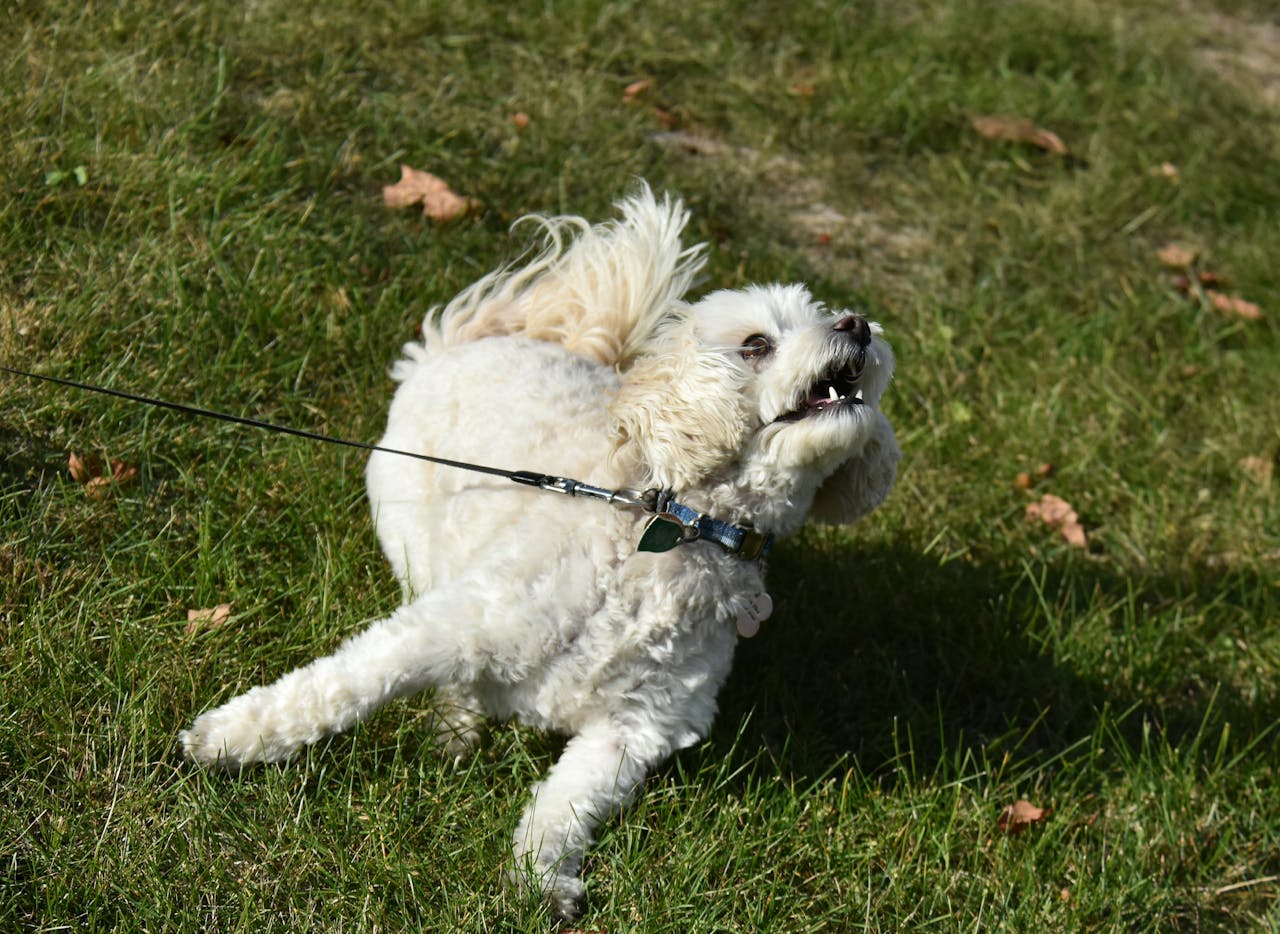
Most dogs are at their worst on walks because their owners are at their most reactive on walks.
What We Focus On
A dog pulls toward another dog, and you tighten the lead and say something. A dog lunges at a cyclist, and you correct it. A dog barks at a child, and the whole walk stops.
The outside world is full of triggers, and owners spend most of their attention managing them.
What We Ignore
Meanwhile, the thirty seconds when your dog was walking calmly beside you just before that cyclist appeared? Nothing. No acknowledgment. No signal that this was exactly what you wanted.
What the Dog Experiences
So from his side, the walk feels like a series of corrections with stretches of silence in between. He is not learning what good looks like out there. He is only learning what wrong looks like.
What Changed With Milo
With Milo, the walks that changed things were not the ones where I corrected him less. They were the ones where I started talking to him more during the calm parts.
When he was trotting beside me without pulling, I’d say his name, keep my voice low and easy, let him know I was there and that this, right here, was good.
That quiet, well-timed acknowledgment of calm behavior is so important when learning how to build trust with your dog.
Timing Matters
When he clocked another dog across the street but kept walking without reacting, I told him so immediately. Not with a treat pulled from a pocket after a five-second delay.
Right then, with my voice, while the moment was still the moment.
Why This Works
A dog who gets acknowledged for walking calmly starts to understand that calm walking is the thing that keeps the good feeling going.
He is not just managing himself. He is actively choosing the behavior that gets him something, and what he’s getting is your attention and your approval.
High-Energy Dogs Need This Most
This matters especially with high-energy breeds. Jack Russells on a walk are processing an enormous amount of information.
Every smell, every movement, every sound is a potential event. The default is stimulation.
Your Role in That Environment
Your job is not to suppress that. Your job is to give him a reason to keep coming back to you in the middle of it, and you do that by being worth coming back to.
Noticing him when he’s good outside is what makes you worth coming back to.
What happens when you start noticing
Milo settled differently once I started paying attention to these moments.
Changes in Behavior
Less nudging when I was busy. Less pacing when I was on calls. He started choosing his bed instead of following me from room to room, waiting for something to happen.
What Actually Shifted
He wasn’t anxious before. He just hadn’t learned yet that the calm was worth staying in.
A Different Kind of Dog
When a dog figures out that the quiet is where good things happen, too, something shifts in how he carries himself at home.
He’s not on alert for his next opportunity to get your attention. He’s just with you.
What Changes for You
There is also something that happens on your side of it. When you start actively noticing when your dog is being good, you stop relating to him only through problems.
You stop being the person who shows up to correct and redirect. You become the person who notices him.
That changes the dynamic in a way that no training protocol really covers.
What I stopped overlooking
I used to think the big moments were where the bond lived. The long walks. The games in the garden. The evenings on the couch at the end of the day.
The Power of Small Moments
Those matter. But the small ones do something the big ones can’t.
What Quiet Attention Says
When I acknowledge Milo during a moment where nothing is required of either of us, I am telling him that my attention isn’t conditional.
That I’m not only present when there’s a reason to be. That quiet time with me is still time with me.
Meeting Him Where He Is
At nine years old, Milo has slowed down a little. He still has his Jack Russell moments, the sudden sprint across the garden, the bark at absolutely nothing, the decision that whatever I’m holding needs to be investigated immediately.
But he also spends more time just being still. And I have learned to meet him there.
A Simple Reminder
Not every moment needs to be a training opportunity or a game or a walk. Some moments are just the two of you in the same room, and he is calm, and you could say something.
Say something.
The question worth sitting with:
When was the last time your dog was just being good and you stopped to tell him?
Not Just Training
Not as part of a training session. Not because he did something impressive.
Just Because It Matters
Just because he was there and he was calm, and he deserved to know you noticed.
Try It Today
If you can’t remember, try it today. It costs thirty seconds, and it lands somewhere that a lot of expensive things don’t reach.
Key Takeaways
- When thinking about how to build trust with your dog, it often starts in the quiet moments. When your dog is calm and doing nothing wrong, that’s not nothing. It’s a choice, and noticing it shows him that calm behavior matters.
- How to build trust with your dog? Don’t only respond when something goes wrong. If attention only comes with barking, stealing, or demanding, your dog learns that noise works better than calm.
- The smallest acknowledgments are key to learning how to build trust with your dog. A soft word, a quick touch, or simply saying his name in a calm moment tells him you see him without needing to make a fuss.
- When learning how to build trust with your dog, timing matters more than intensity. Acknowledging calm behavior right as it happens helps your dog understand what’s working without confusion.
- If you’re wondering how to build trust with your dog, be present even when nothing is happening. When your attention isn’t tied to problems or excitement, your dog learns that being calm with you is enough.