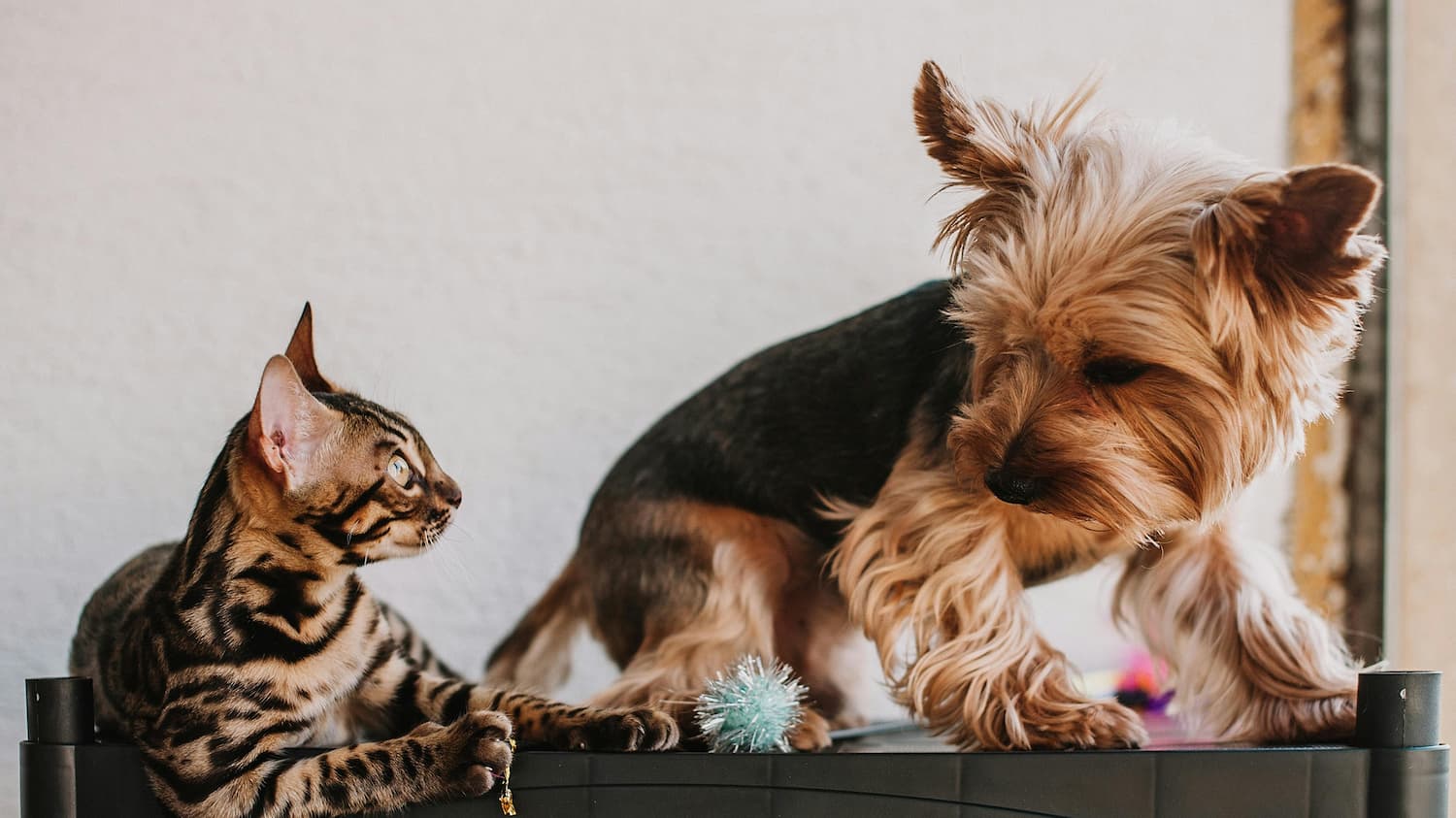
Do cats care less than dogs? New research examines how pets respond when humans need help. Often considered a uniquely human trait, scientists wanted to see where helping behavior comes from in humans and possibly our pets. Could domestication make a difference in pets? Are humans really the only ones who naturally try to help others? To find out if cats or dogs are more like humans than previously assumed, scientists devised a creative experiment to test helping behaviors between cats, dogs, toddlers, and their caregivers.
To find out who is helpful, they compared toddlers (16–24 months old), pet dogs, and pet cats in a cleverly designed experiment. Neither the cats nor dogs had any study specific training. They were typical companion animals being tested with their owners at a testing facility.
The researchers created a simple “lost item” situation. A parent or pet owner pretended to search for an object that had been hidden earlier by a researcher in front of the child, dog, or cat. Importantly, the parent/owner never asked for help. They just looked around as if they had misplaced something. The researchers then watched to see whether the subjects paid attention, pointed things out, fetched the object, or otherwise tried to help. One aspect of the results was surprising.

Scientists Compared Cats, Dogs, and Young Children—Here’s Who Stepped Up to Help
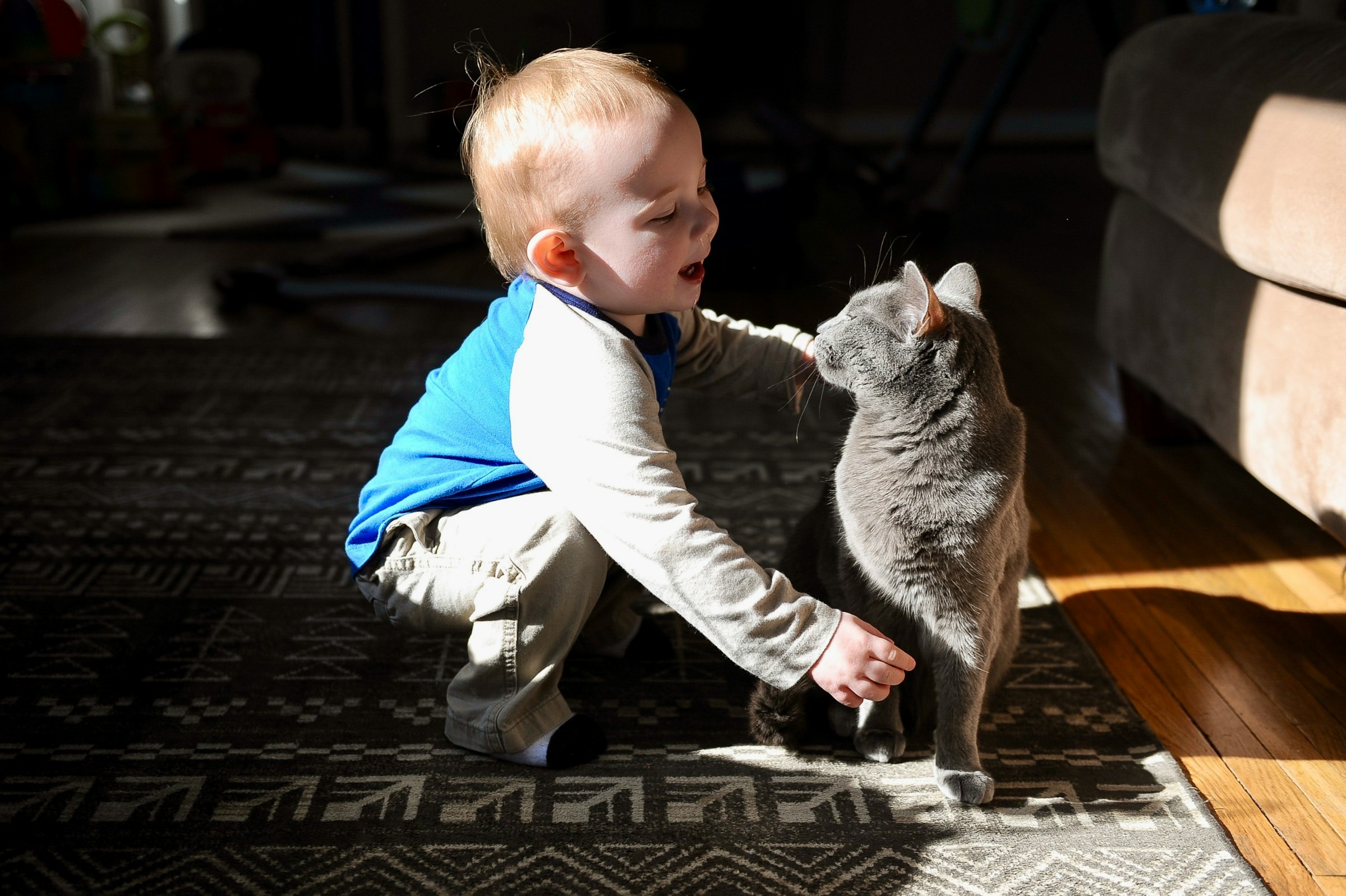
Are dogs like children? The results were pretty interesting. Toddlers and dogs behaved surprisingly similarly. All species paid attention to either the object or the person looking for the object. However, dogs and children often interacted similarly in ways that suggested they were trying to help.
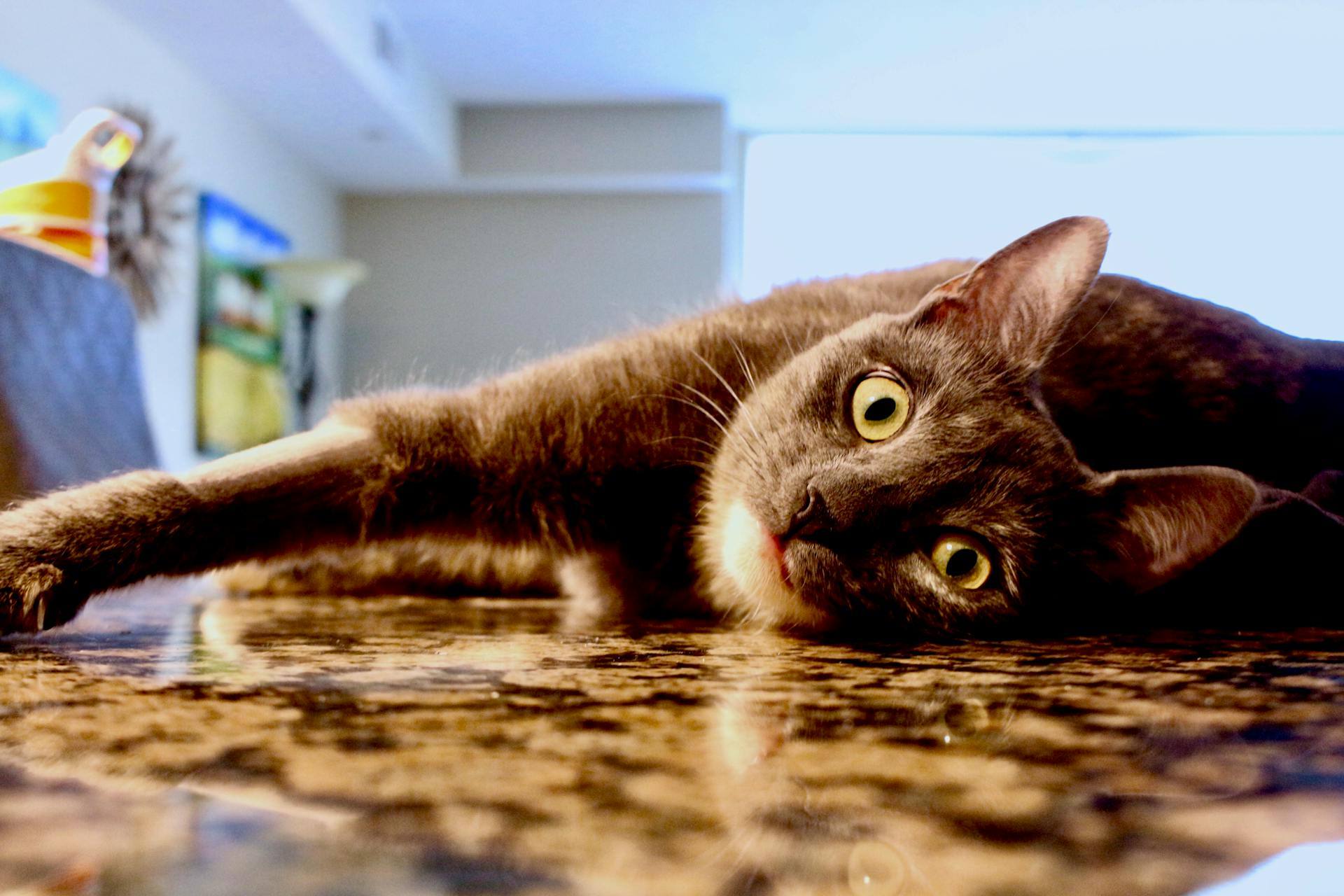
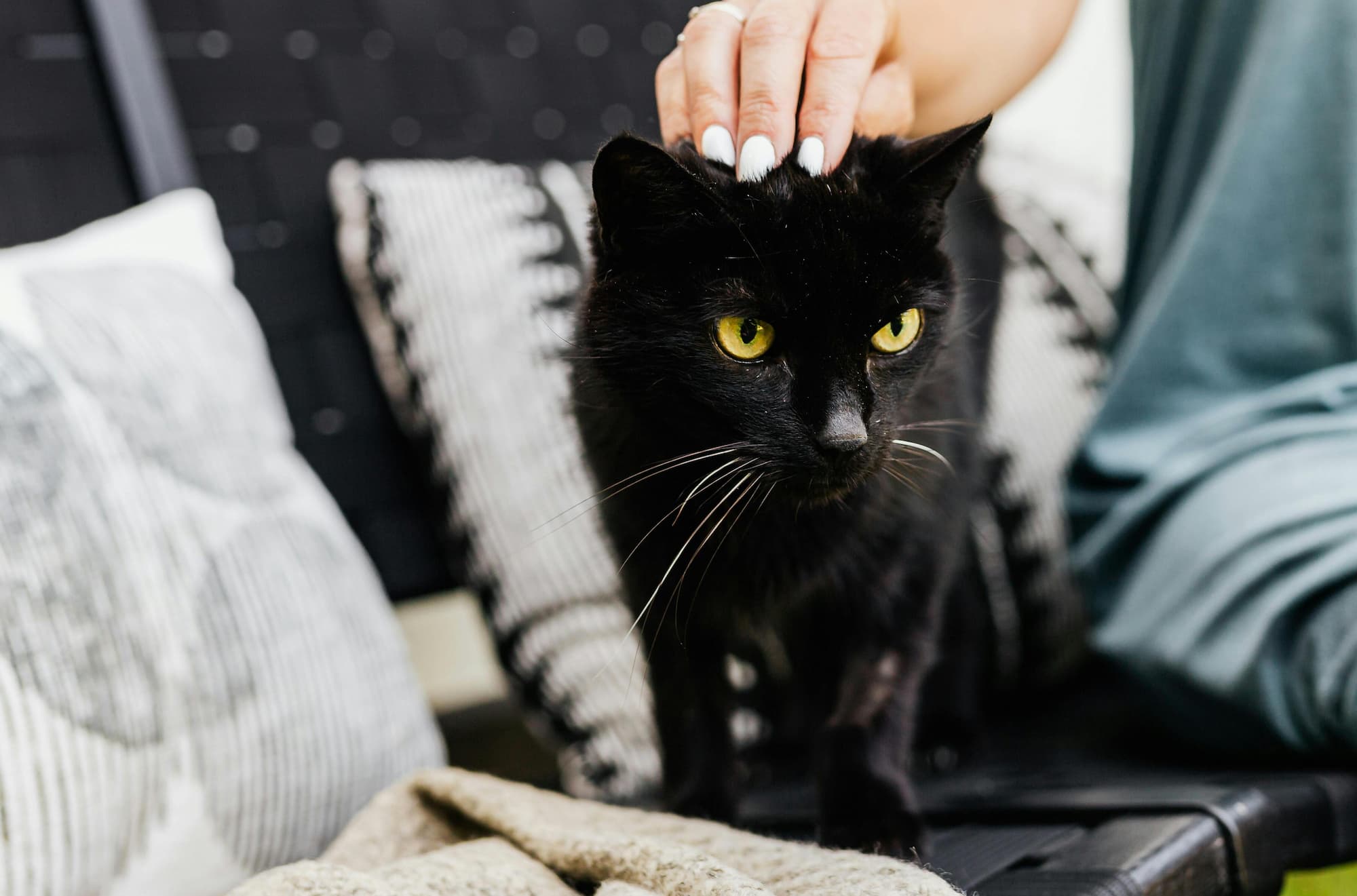
Cats, meanwhile, took a more “that’s a you problem” approach. Some cats did look back and forth between the owner and the hidden object. As if the cats were saying, “I know where it is”—but they were much less likely to actively help.
Not explored in this study was a previous cat whisperer study regarding cat facial expressions. This study might suggest that the cats were in fact subtly giving their owner a clue as to the location of the object, if the owners and researchers were able to discern between the cat’s 276 different facial expressions.
Are Dogs Basically Furry Toddlers?
All three species were attentive to their distressed caretaker. However dogs, compared to cats, were remarkable prosocial (helpful) To make sure the cats weren’t simply unmotivated, the researchers also ran a test where the hidden item was the animal’s favorite toy or treat. In that situation, cats were just as engaged as everyone else. In other words, they were perfectly capable of getting involved when something they cared about was on the line.
Why do Cats Care Less Than Dogs?
The takeaway? Simply living with humans isn’t enough to make an animal naturally helpful in human-like ways. Dogs seem to share some of the same cooperative instincts as young children, likely because both evolved from highly social ancestors. Combined with thousands of years of domestication, this may explain why dogs are such enthusiastic teammates. Cats on the other hand, generally more solitary and socially disinterested, remain charmingly independent, and apparently less interested in solving human problems unless there’s something in it for them.
References:
- Melitta Csepregi, Anna Ágnes Moravcsik, Ádám Miklósi, Márta Gácsi, Dogs’ behaviour is more similar to that of children than to that of cats in a prosocial problem situation, Animal Behaviour, Volume 233, March 2026, 123488
- S.L. Crowley et al.Our wild companions: Domestic cats in the AnthropoceneTrends in Ecology & Evolution(2020)